

Table of Contents
Breast implants are not lifetime devices, and there is no fixed replacement date for every patient. Some require removal or replacement earlier because of complications, while others remain in place longer. Implant condition, symptoms, imaging findings and personal preferences help guide the decision.
Dr Anthony Barker, Specialist Plastic and Reconstructive Surgeon in Sydney, provides consultation and assessment for patients considering breast augmentation, implant replacement, and revision surgery. Understanding that breast implants are not lifetime devices can help patients plan for long-term follow-up, imaging where appropriate, and the possibility of future revision.
What Is the Average Lifespan of Breast Implants?
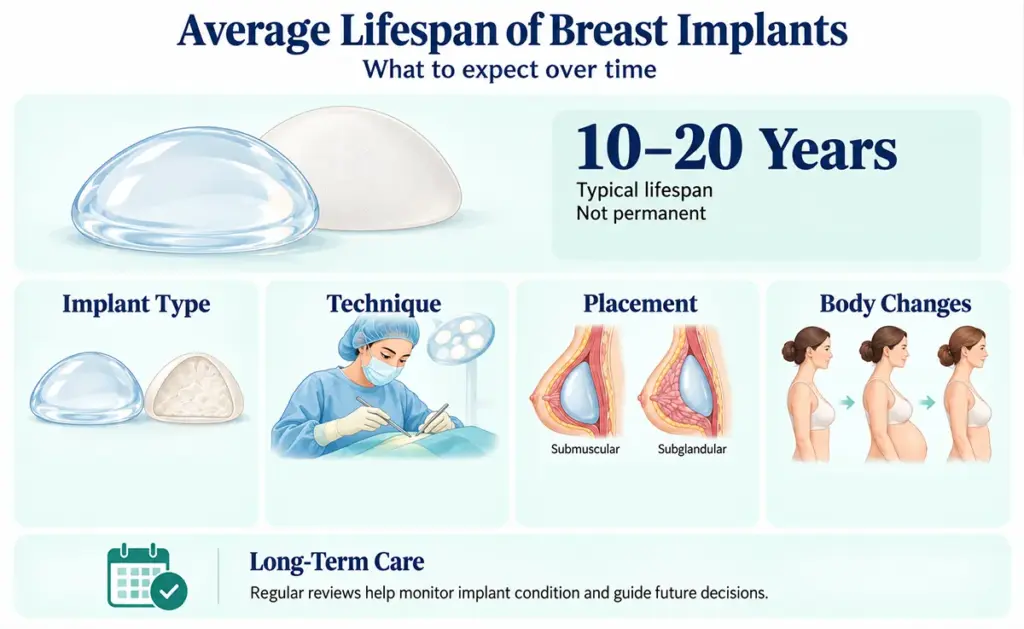
Breast implants typically last between 10 to 20 years. While some may remain intact well beyond that, others might require revision earlier due to complications or changes in personal preferences. Knowing that implants are not permanent can help set realistic expectations and plan for the future.
The 10-year mark is often used as a guideline, not a hard rule. Some patients have implants that last far beyond this timeframe without any issues. However, the risk of complications such as rupture or capsular contracture increases over time. It’s essential to view breast implants as part of a longer-term care plan, rather than a one-time procedure. Recognising the typical lifecycle of implants enables patients to anticipate the possibility of replacement and engage in regular medical evaluations.
Factors That Affect How Long Breast Implants Last
✓ Type of Implant
Silicone and saline implants differ in construction and durability. Silicone implants are often preferred for their cohesive gel texture, which more closely mimics natural breast tissue. Saline implants, while also widely used, may be more prone to visible wrinkling or rippling. Additionally, saline implants show signs of rupture more clearly as they deflate, while silicone ruptures are often silent.
Modern silicone implants used today are more durable than earlier generations. Highly cohesive silicone gel, often referred to as “gummy bear” implants, are designed to maintain shape even if the outer shell is compromised. These newer models are engineered with safety in mind, and they represent a significant improvement over older designs that were more susceptible to leakage or rupture.
✓ Surgical Technique
Surgical technique is one of several factors that may influence long-term implant outcomes. Dr Anthony Barker assesses implant position, breast tissue characteristics, incision options, and pocket selection as part of individualised surgical planning. Careful implant handling, appropriate pocket creation, and attention to tissue characteristics are considered during surgery.
The initial surgical approach can have a lasting effect on the health and appearance of the implants. Attention to symmetry, tissue preservation, and sterile conditions during the procedure are essential factors that influence long-term satisfaction and implant longevity.
✓ Implant Placement
Implants placed under the chest muscle (submuscular placement) may have improved longevity due to added support from the surrounding tissue. This placement can also reduce the visibility of implant edges and lower the risk of capsular contracture. On the other hand, subglandular placement (above the muscle) may be appropriate for certain body types and aesthetic goals.
Implant placement is selected according to individual anatomy, breast tissue coverage, implant characteristics, and the surgical plan. Dr Barker discusses the potential advantages and limitations of different placement options during consultation.
✓ Lifestyle and Body Changes
Pregnancy, weight changes, ageing, and changes in breast tissue can affect the appearance and position of implants over time, even when the implants themselves remain intact.
Ageing also plays a role in implant longevity. As the skin and underlying tissue lose elasticity, the appearance and position of the implants may change. While implants themselves may remain intact, changes in the surrounding tissue can prompt a desire for revision to maintain aesthetic balance.
Signs Your Breast Implants May Need Replacement
Several signs could indicate the need for a review or replacement. Noticeable changes in breast shape or symmetry may suggest shifting or rupture. Pain or persistent discomfort that develops without clear cause can be an early sign of capsular contracture or other issues requiring attention. Hardening or tightness of the breast, often due to the formation of scar tissue, may also signal the need for evaluation.
Saline implants that rupture typically deflate and become visibly smaller over a short period. In contrast, silicone implants may rupture silently. In these cases, the gel remains trapped in the surrounding tissue, often undetected without imaging. A silent rupture might not present obvious symptoms but still requires intervention.
Other subtle changes, such as a feeling of tightness or altered sensation, may also warrant an evaluation. Regular self-assessment combined with professional reviews ensures any potential issues are caught early. Early detection can simplify the treatment approach and preserve the appearance and comfort of the breast area.
Changes in breast shape, firmness, discomfort, or implant position should be assessed by an appropriately qualified medical practitioner. Early assessment can help determine whether imaging, observation, or further treatment may be appropriate.
The Role of Regular Follow-Up Care
Follow-up appointments are essential even years after surgery. Regular clinical assessments help identify early signs of complications. For those with silicone implants, imaging techniques such as MRI or ultrasound are occasionally recommended to assess implant integrity. These scans can detect silent ruptures or subtle tissue changes that are not externally visible.
Long-term follow-up forms part of breast implant care. Dr Barker can review changes in breast appearance, symptoms, implant history, and previous imaging, and discuss whether further assessment or imaging may be appropriate. Pasted markdown
Consistency in aftercare builds a relationship of trust between patient and surgeon. It also ensures that any necessary updates or enhancements to the implants are discussed with full knowledge of the patient’s history and prior procedures. Follow-ups are not only about safety-they are also a chance to reassess personal goals and make informed adjustments when desired.
When Should You Consider Breast Implant Replacement?
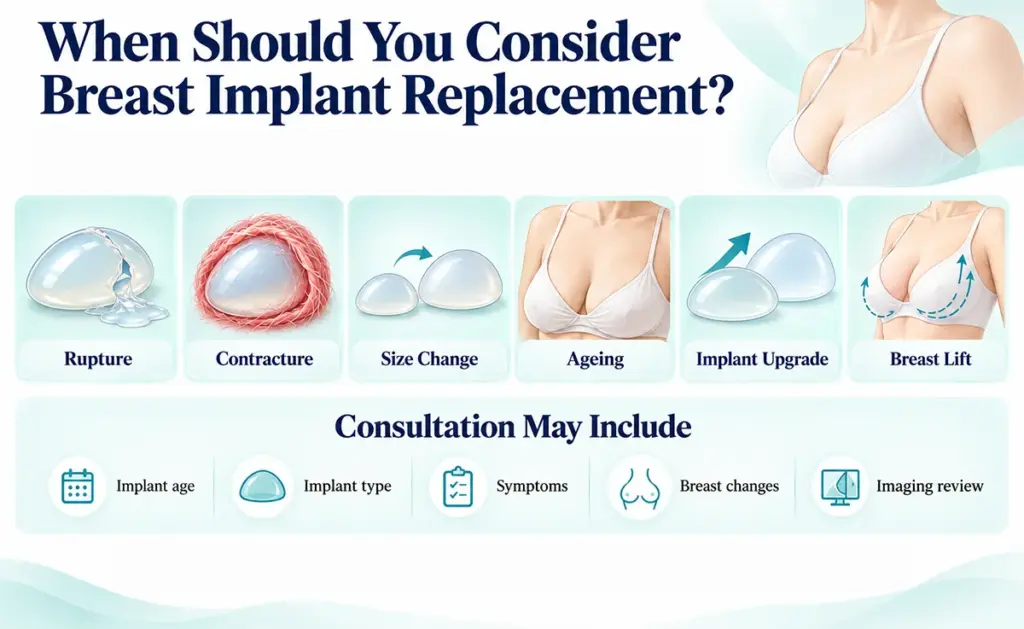
Not all implants require replacement at the 10-year mark. However, some patients may choose revision due to implant rupture, capsular contracture, changes in size preference, or the natural ageing process. Replacing implants may also offer an opportunity to update the shape, feel, or technology of the implants.
In some cases, patients seek revision to switch from saline to silicone implants or to newer implant models that offer improved shape and feel. Others may combine implant replacement with additional procedures such as a breast lift for enhanced results. This approach addresses both functional concerns and aesthetic aspirations in a single surgery.
Dr Anthony Barker provides individual assessment for patients considering implant replacement or revision. Consultation may include review of implant age and type, symptoms, breast tissue changes, imaging where relevant, and the patient’s current priorities. Pasted markdown
Breast Re-Implantation Before and After Photo
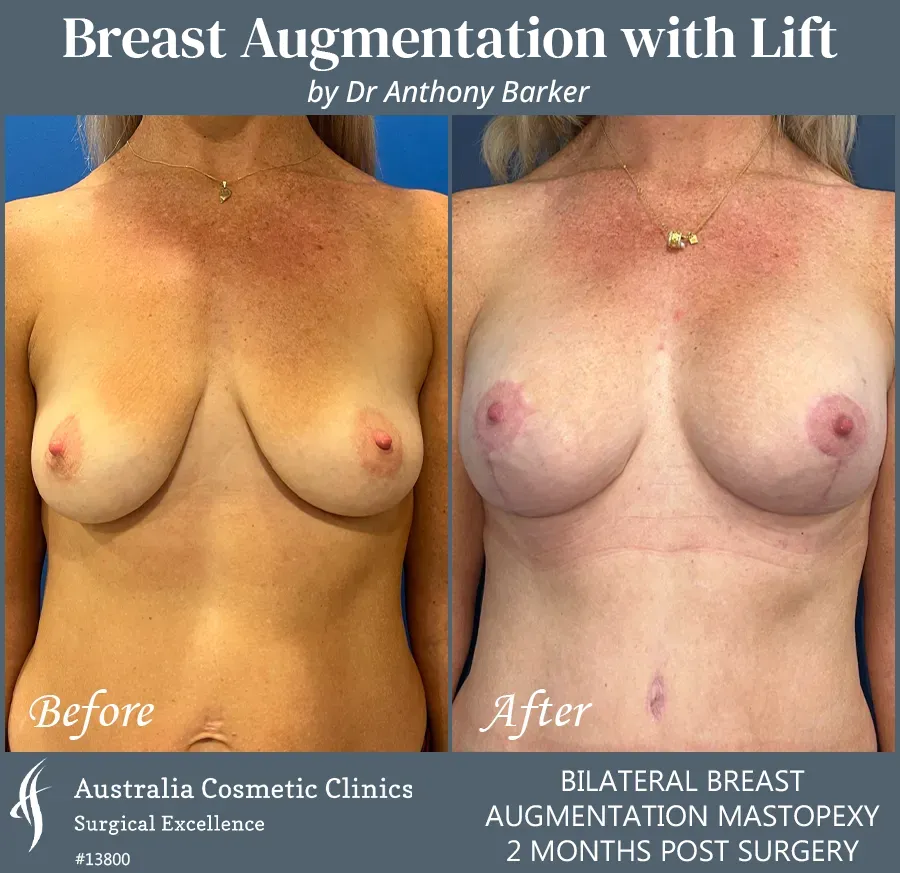
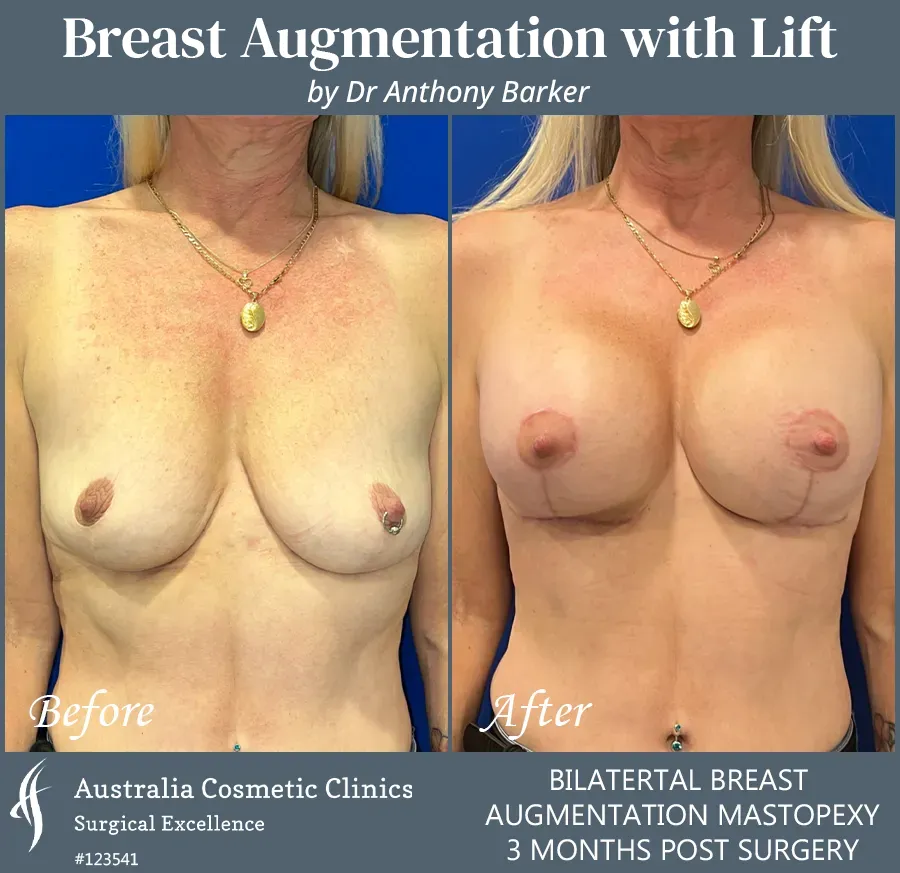
Implant Revision Surgery: What to Expect
Revision surgery differs slightly from primary augmentation. The process may involve removing old implants, addressing scar tissue, and placing new implants. Depending on patient needs, the procedure may also involve a breast lift. These revisions require careful assessment of the current implant condition and any anatomical changes since the original surgery.
Recovery from revision surgery varies depending on the extent of changes made. While some aspects may feel familiar to patients who have had augmentation before, others may involve different care strategies. A detailed recovery plan is provided to support healing and comfort.
Revision surgery requires assessment of the existing implants, surrounding capsule, breast tissue, skin quality, and any changes that have occurred since the original procedure. Dr Barker discusses the available options, expected recovery, potential risks, and whether additional procedures may be appropriate. Pasted markdown
Supporting Your Decision About Breast Implant Replacement
Deciding whether breast implants require replacement depends on more than implant age alone. Assessment may consider implant integrity, symptoms, breast tissue changes, imaging findings, previous surgery, and the patient’s current priorities.
Dr Anthony Barker, Specialist Plastic and Reconstructive Surgeon, provides consultation for patients considering breast implant revision or replacement in Sydney. Consultation focuses on reviewing the existing implants, discussing available options, explaining potential risks and recovery, and helping patients make an informed decision based on their individual circumstances.
Take our Plastic Surgery Quiz to find out if you are an appropriate candidate and if you are ready for cosmetic surgery.
FAQs About Breast Implant Longevity and Replacement
Can the natural ageing process around the implant affect its appearance over time?
- Yes, even if the implants themselves remain intact, the surrounding breast tissue can change due to ageing. Skin may lose elasticity, and gravity can influence implant position, leading some patients to consider revision or lifting procedures.
If I’m not experiencing symptoms, how will I know when my implants might need replacement?
- Many changes are subtle and gradual. Even without symptoms, regular reviews and imaging—particularly for silicone implants—can detect early issues like silent rupture or minor capsular changes before they become problematic.
What happens to the surrounding tissue if an implant has been in place for decades?
- Over many years, the body forms a capsule around the implant. While this is normal, changes in this tissue—such as thickening, tightening, or calcium deposits—can affect both comfort and appearance, warranting medical assessment.
Are older implants more likely to rupture during high-impact activity or physical strain?
- While modern implants are resilient, older implants—especially beyond the 20-year mark—may be more vulnerable to wear. Activities that involve repetitive chest movement or trauma can increase this risk over time.
Can hormonal changes from menopause or pregnancy affect my existing implants?
- Yes, hormonal fluctuations can influence the natural breast tissue and skin, potentially altering the look or feel of the implants. Many patients notice differences in fullness or firmness during life stages involving hormonal shifts.
Is it possible to keep the same implants but have a lift procedure if my breasts change shape?
- In some cases, yes. If the implants are still in good condition, a breast lift can improve the breast’s shape and position without replacing the implant. This option is assessed case-by-case based on tissue condition and aesthetic goals.
Do implants last longer if they were placed beneath the muscle?
- Submuscular placement can offer more structural support and may reduce stress on the implant shell, potentially extending implant lifespan. This placement also provides a natural contour and may lower the risk of capsular contracture.
Medical References
- Breast Implants
U.S. Food and Drug Administration (FDA)
https://www.fda.gov/medical-devices/implants-and-prosthetics/breast-implants - Risks and Complications of Breast Implants
U.S. Food and Drug Administration (FDA)
https://www.fda.gov/medical-devices/breast-implants/risks-and-complications-breast-implants - Breast Implant Illness: A Systematic Review
National Library of Medicine
https://pubmed.ncbi.nlm.nih.gov/38636098/ - Breast Reconstruction With Implants
Mayo Clinic
https://www.mayoclinic.org/tests-procedures/breast-reconstruction/about/pac-20384562

Further Reading
- Read the Procedure Page about Breast Implant Replacement
- Read the Blog on Recovery After Breast Implant Exchange
- Read the Procedure Page about Breast Implant Removal Without Replacement
- Read the Procedure Page about Breast Implant Removal with Lift Sydney
- Read Australia Cosmetic Clinics’ Resource Page on Breast Surgery Price List