

Abdominoplasty (Tummy Tuck) in Sydney
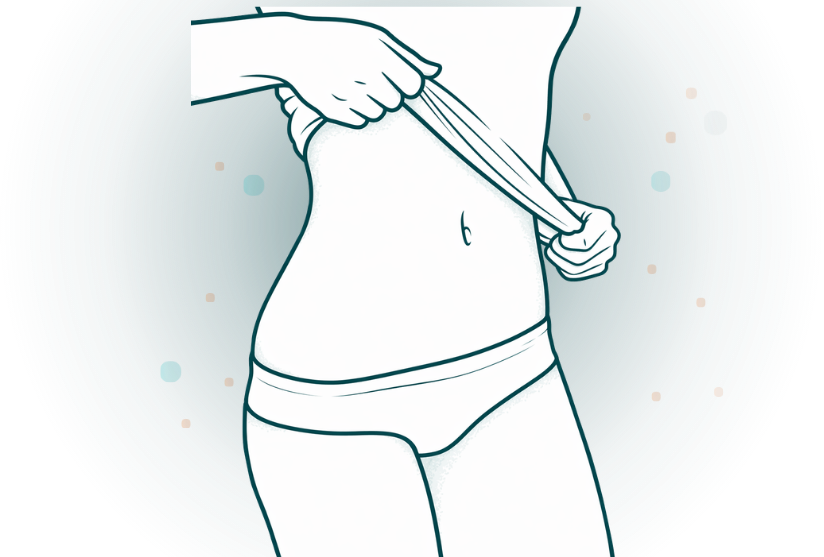
A Structured Approach To Managing Excess Abdominal Skin And Abdominal Wall Laxity
Abdominoplasty (Tummy Tuck) is a body surgery procedure that addresses changes in the abdominal region that may include excess skin, localised fat deposits, and muscle laxity in the abdominal wall. These changes may occur gradually over time or develop after pregnancy or significant changes in body weight. In many cases, the concern is not related to weight alone. Skin quality, tissue elasticity, and the integrity of deeper abdominal support layers can play a significant role in how the abdomen looks and feels.
At Australia Cosmetic Clinics, Dr Anthony Barker, Specialist Plastic and Reconstructive Surgeon, provides consultation and assessment for patients considering Abdominoplasty (Tummy Tuck). His clinical practice includes body contouring, post-pregnancy restoration, and complex surgery following significant weight loss. Consultation focuses on careful clinical assessment, clear communication, and individualised planning, including what surgery may address, its limitations, expected scarring, recovery requirements, and potential risks.
- Abdominoplasty (Tummy Tuck) may address excess abdominal skin, selected localised fat deposits, and rectus muscle separation when clinically indicated
- Abdominoplasty (Tummy Tuck) is not designed for weight reduction
- Planning typically considers anatomy, skin quality, existing scars, muscle separation, and recovery requirements
All photographs have been used with the patient’s express written permission. The information on this site is not intended to replace expert medical advice. There are risks associated with any surgical or invasive operation. You should obtain the advice of a licensed health professional before continuing.
What Is Abdominoplasty (Tummy Tuck)?
Abdominoplasty (Tummy Tuck) involves removal of excess abdominal skin and repositioning of the remaining tissues. Where clinically indicated, it may include repair of rectus diastasis, a separation of the rectus muscles along the midline of the abdomen. The abdominal region includes skin, subcutaneous fat, connective tissue, and muscle. Changes in any layer can influence abdominal contour, tissue folding, and the sense of support across the abdomen.
Consultation is used to clarify which tissue layers are contributing most to the concern. Some patients have predominantly skin redundancy, while others have a combination of skin redundancy and abdominal wall laxity, with or without localised fat deposits. Understanding the primary drivers supports appropriate technique selection and helps set realistic expectations about scarring, recovery, and the degree of change that may be possible.
Abdominoplasty (Tummy Tuck) commonly involves
- A planned lower abdominal incision
- Elevation and repositioning of skin and soft tissue
- Removal of excess skin
- Navel repositioning in standard techniques
- Layered closure to support healing
Rectus diastasis repair may be considered when
- Separation is present and clinically relevant
- Examination suggests repair may help improve abdominal wall support
Liposuction may be included in selected cases
- When there are adjacent localised fat deposits that are appropriate to treat as part of the surgical plan
Why People Consider Abdominoplasty (Tummy Tuck)
Many people explore Abdominoplasty (Tummy Tuck) after noticing persistent abdominal tissue changes that do not respond to non-surgical measures. This can occur after pregnancy or significant weight loss, where the skin may not retract fully due to changes in elasticity. Some individuals also notice a change in how the abdominal wall feels, particularly when rectus diastasis is present. In these circumstances, exercise and general conditioning can support strength and overall health, but may not resolve excess skin or structural separation.
A structured consultation helps clarify whether the concerns relate primarily to skin redundancy, abdominal wall laxity, rectus muscle separation, localised fat deposits, or a combination. This is important because Abdominoplasty (Tummy Tuck) is tailored to anatomy and goals, and the degree of change varies between individuals. Discussion also includes the expected scar position and length, the staged nature of recovery, and the need for follow-up care.
Common reasons patients explore Abdominoplasty (Tummy Tuck) include
- Excess abdominal skin and tissue folding
- Skin redundancy after pregnancy that does not change over time
- Skin redundancy following significant weight loss
- A sense of reduced abdominal wall support
- Localised contour concerns that persist despite stable weight and consistent exercise
Key points discussed in consultation include
- Abdominoplasty (Tummy Tuck) is not a method for overall weight reduction
- Results vary between individuals and depend on anatomy and tissue quality
- Scarring after tummy tuck is expected and will be discussed in detail
Technique Options And How The Approach Is Selected
There are several types of Abdominoplasty (Tummy Tuck). The technique is selected based on the extent and location of tissue changes, skin quality, existing scars, and whether abdominal wall repair is likely to be appropriate. Some patients have concerns that are largely limited to the lower abdomen, while others have changes extending across the sides of the torso. A personalised plan is developed during consultation after clinical assessment.
The aim of technique selection is to address structural and surface concerns in a way that aligns with the patient’s anatomy and expectations. Discussion includes incision placement, the need for navel repositioning, and whether adjunctive procedures such as liposuction may be appropriate. In selected patients, adjunctive contouring treatments such as BodyTite may also be discussed as part of the overall treatment plan. The surgical plan also considers closure tension and tissue blood supply, which are important factors in healing.
Common technique categories include
- Standard Abdominoplasty (Tummy Tuck), often includes navel repositioning
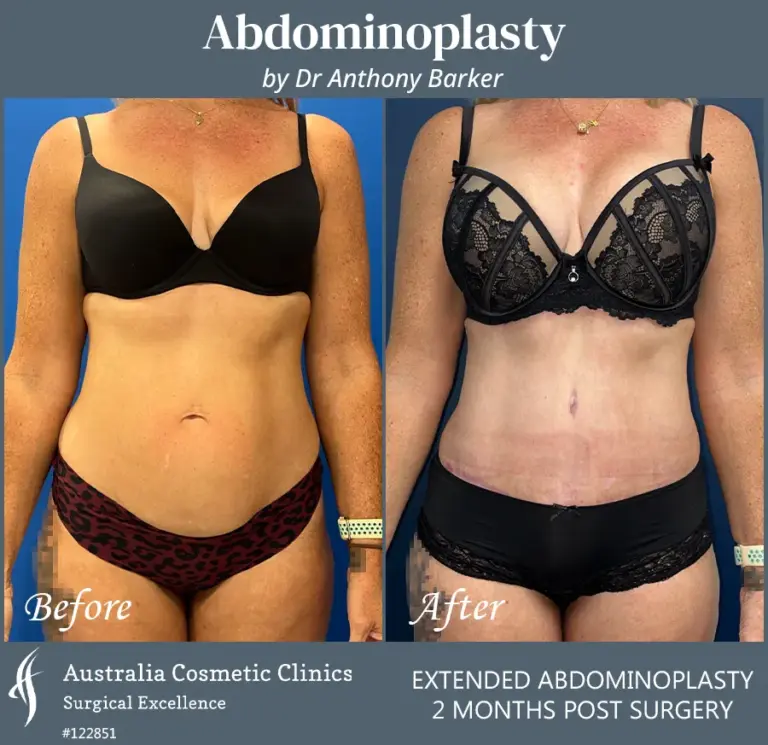
- Extended Abdominoplasty (Tummy Tuck), addresses a wider area including the sides of the torso
- Combination approaches, may include liposuction when clinically appropriate
Factors that influence technique selection include
- Distribution of excess skin
- Degree of abdominal wall laxity
- Presence and extent of rectus diastasis
- Prior abdominal scars, including caesarean scars
- Skin quality and stretch-mark distribution
Who May Consider Abdominoplasty (Tummy Tuck)?
Abdominoplasty (Tummy Tuck) may be considered by individuals who experience ongoing abdominal tissue changes that do not respond to non-surgical measures. These changes may include excess skin, reduced skin recoil, or abdominal wall laxity that remains despite stable weight and consistent activity. In post-pregnancy and post-weight-loss contexts, the concern is often related to tissue elasticity and structural support rather than weight itself.
Suitability is not determined by a single factor. A decision to proceed is based on clinical assessment, overall health, lifestyle factors, and whether the procedure aligns with the patient’s goals and recovery capacity. Consultation also includes a detailed discussion of limitations and variability, because outcomes and scar appearance can differ between individuals.
Abdominoplasty (Tummy Tuck) may be discussed when there is
- Excess abdominal skin with reduced recoil
- Skin redundancy after significant weight loss
- Persistent abdominal wall laxity after pregnancy
- Suspected or confirmed rectus diastasis
Abdominoplasty (Tummy Tuck) is typically not positioned as
- A method for overall weight reduction
- A substitute for general fitness or core conditioning
Take our Plastic Surgery Quiz
Consultation And Candidacy Assessment
Suitability for Abdominoplasty (Tummy Tuck) is determined through a comprehensive consultation with a qualified Specialist Plastic Surgeon. The consultation includes review of medical history, medications, previous surgery, and relevant lifestyle factors. A physical examination assesses skin quality, the degree and distribution of laxity, fat distribution, the presence of rectus diastasis, and the impact of any existing scars.
Equally important is an expectations discussion. Abdominoplasty (Tummy Tuck) can address specific anatomical concerns, but it does not stop natural ageing or prevent future changes related to pregnancy or weight variation. A clear understanding of scarring, recovery time, and potential risks supports informed decision-making and helps ensure the procedure aligns with the patient’s circumstances.
Consultation commonly reviews
- Overall health and medical conditions
- Medications, supplements, allergies, and surgical history
- Smoking or vaping status, due to effects on wound healing
- Skin quality and the degree of laxity
- Presence and extent of rectus diastasis
- Weight stability and lifestyle factors affecting recovery
Discussion commonly includes
- Technique options and incision planning
- Expected scarring and scar maturation
- Recovery stages, activity restrictions, and follow-up schedule
- Surgical risks and how risk is managed
Timing Considerations
Timing is a key part of planning. Patients are commonly advised to consider Abdominoplasty (Tummy Tuck) when weight has been stable, because significant weight changes after surgery can affect the longer-term appearance of the abdomen. Pregnancy planning is also relevant because pregnancy places stress on the abdominal wall and can change skin and muscle tension. These factors are discussed in consultation so timing can be chosen to align with the patient’s situation.
Practical planning is also important. Recovery requires a period of restricted activity, support at home, and time away from work that varies depending on the type of work performed. Planning for transport, caregiving responsibilities, and the ability to attend follow-up appointments supports safer recovery.
Timing considerations often include
- Weight stability over time
- Pregnancy plans
- Work demands and caregiving responsibilities
- Medical conditions that may need optimisation before elective surgery
Abdominoplasty (Tummy Tuck) may be delayed when
- Weight is changing significantly
- A medical issue requires stabilisation before surgery
- Recovery support at home is not currently available
How Abdominoplasty (Tummy Tuck) Is Performed
Abdominoplasty (Tummy Tuck) is performed under general anaesthesia in an accredited hospital or surgical facility. The technique is based on the individual surgical plan developed during consultation. In general terms, the surgeon makes a planned incision along the lower abdomen. The position is selected with consideration for typical clothing lines where practical, while still meeting the surgical requirements for tissue repositioning and closure.
The skin and soft tissue are elevated to allow access to the abdominal wall. If rectus diastasis is present and repair is recommended, sutures are used to bring the rectus muscles closer together along the midline. Excess skin is removed, the remaining skin is repositioned, and the incision is closed in layers to support healing and reduce closure tension. In standard approaches, the navel is repositioned to maintain appropriate anatomical placement.
Surgical elements commonly include
- Lower abdominal incision planning
- Elevation and repositioning of skin and soft tissue
- Rectus diastasis repair when clinically indicated
- Removal of excess skin
- Navel repositioning in standard techniques
- Layered closure to support healing
In selected cases, the surgical plan may include
- Liposuction of adjacent areas for localised fat deposits when appropriate

Scarring And Incision Planning
Scarring is expected after Abdominoplasty (Tummy Tuck). Scar position and length vary depending on the extent of skin redundancy and the technique required to safely remove and reposition tissue. Incisions are planned as low as practical, but the final scar must reflect what is needed to achieve stable closure and support tissue healing. Scar appearance typically changes over time as part of normal scar maturation, though the degree of change varies between individuals.
Consultation includes discussion of anticipated scar placement and factors that influence scar quality. These factors may include skin type, genetics, tension on the incision, wound healing characteristics, and adherence to post-operative instructions. Follow-up appointments allow the surgeon to monitor healing and provide guidance on scar care where appropriate.
Key points about scarring
- A lower abdominal scar is expected
- Scar length depends on the amount of tissue requiring adjustment
- Scar maturation occurs gradually and varies between individuals
Factors that may influence scar quality
- Existing scars, including caesarean scars
- Skin type and genetic tendency for scar variation
- Closure tension and healing progress
- Post-operative care and follow-up attendance
Recovery And Post-Operative Care
Recovery after Abdominoplasty (Tummy Tuck) is gradual and varies between individuals. In the early phase, swelling, bruising, and a feeling of tightness are common. Movement may feel restricted initially, particularly if abdominal wall repair has been performed. Discomfort is managed as part of a structured care plan discussed with the treating team. Gentle walking is commonly introduced as advised to support circulation and general recovery.
Compression garments are commonly recommended to support the surgical area and assist with swelling management. Follow-up appointments are a routine part of care and allow the surgeon to assess healing, review wound care, and guide activity progression. Adherence to post-operative instructions is important in supporting healing and reducing the likelihood of complications.
Common early recovery features may include
- Swelling and bruising
- Tightness across the abdomen
- Temporary discomfort and restricted movement
- Temporary changes in skin sensation
Post-operative care commonly includes
- Compression garment use for a period advised by the surgeon
- Gentle walking as advised
- Avoiding heavy lifting and strenuous activity initially
- Scheduled follow-up appointments for review and guidance
Returning To Work And Physical Activity
Return to work depends on the extent of surgery, the patient’s healing progress, and the physical demands of their occupation. Desk-based work may be resumed earlier than work that requires lifting, carrying, prolonged standing, or repetitive physical tasks. The treating surgeon provides individual guidance based on recovery progress and examination findings during follow-up.
Physical activity is typically reintroduced in stages. Light movement, such as short walks, is often introduced early as advised. More strenuous activity is resumed later once the surgeon confirms it is appropriate to progress. Staged progression helps protect healing tissues while maintaining safe mobility during recovery.
Return-to-work planning may consider
- Job demands and lifting requirements
- Recovery progress and swelling reduction
- Whether rectus diastasis repair was performed
Activity is commonly reintroduced in stages
- Early phase, gentle walking as advised
- Mid phase, gradual increase in daily activities
- Later phase, return to more demanding activity when cleared by the surgeon
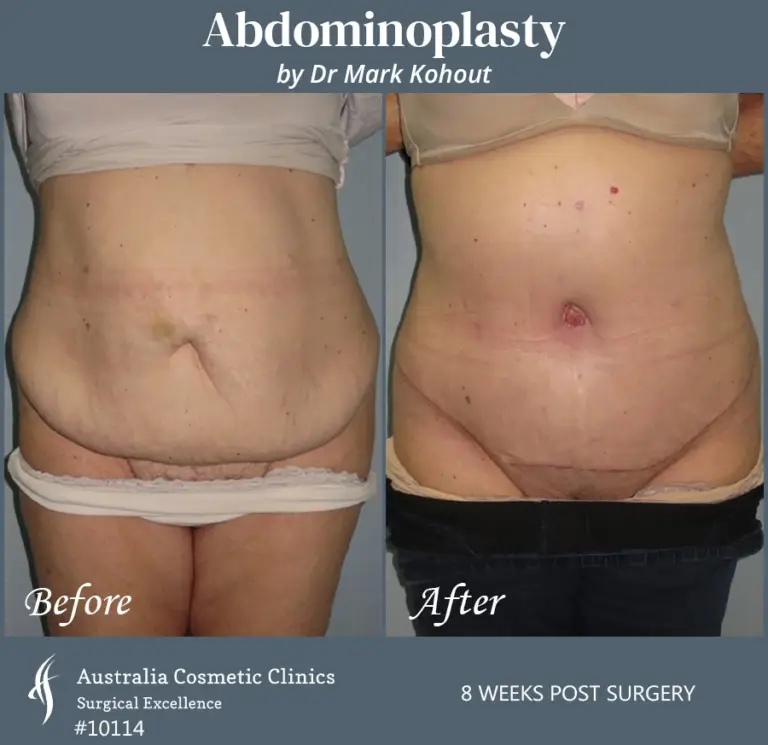
Abdominoplasty/Tummy Tuck Before & After Photos
View Abdominoplasty (Tummy Tuck) Before and After Photo
These photographs show outcomes for individual patients only. Results vary between patients and the outcomes shown should not be taken as representative of what another patient may experience.
Disclaimer
All photographs have been used with the patient’s express written permission. The information on this site is not intended to replace expert medical advice. There are risks associated with any surgical or invasive operation. You should obtain the advice of a licensed health professional before continuing.
What Are The Risks And Potential Complications Of Abdominoplasty?
All surgery carries risk. Abdominoplasty (Tummy Tuck) includes potential risks related to infection, bleeding, fluid collection, delayed wound healing, scarring variation, changes in sensation, and anaesthesia. The likelihood of complications varies depending on the patient’s health, the complexity of surgery, and adherence to post-operative care instructions. These risks are discussed in detail during consultation as part of informed consent.
Risk management includes thorough assessment and planning, appropriate facility standards, and structured follow-up. Patients are encouraged to ask questions and to ensure they understand both the procedure and recovery requirements. Follow-up appointments allow the treating team to monitor healing and address concerns.
Potential risks that may be discussed include
- Infection
- Bleeding or blood collection under the skin
- Fluid collection, also called seroma
- Delayed wound healing
- Scarring that varies between individuals
- Changes in skin sensation, temporary or longer lasting
- Anaesthesia-related risks
Factors that may influence risk include
- Smoking or vaping
- Medical conditions that affect healing
- Extent of tissue adjustment required
- Adherence to post-operative instructions and follow-up
About Dr Anthony Barker
Dr Anthony Barker (MED 0001192942) is a Specialist Plastic and Reconstructive Surgeon with a background in both medicine and biomedical engineering. His clinical practice spans body contouring, post-pregnancy restoration, breast reconstruction and enhancement, and complex surgery following significant weight loss. His biomedical engineering training informs his understanding of anatomy, tissue characteristics, structure, and surgical planning.
Dr Barker completed a BA in Biomedical Engineering at Harvard University before completing his medical and surgical training at the University of Sydney. He is a Fellow of the Royal Australasian College of Surgeons in Plastic Surgery and holds a senior clinical lecturer appointment at Macquarie University, where he mentors surgical trainees and contributes to research relating to breast implant safety and breast augmentation and reconstruction.
- Credentials include
- Specialist Plastic and Reconstructive Surgeon
- BA in Biomedical Engineering, Harvard University
- Bachelor of Medicine and Bachelor of Surgery, University of Sydney
- Master of Surgery (Plastics), University of Sydney
- Fellow of the Royal Australasian College of Surgeons (Plastic Surgery)
- Member of the Australian Society of Plastic Surgeons
- Member of the Australian Society of Aesthetic Plastic Surgeons
- Member of the American Society of Plastic Surgeons
- Professional experience includes
- Body contouring and post-pregnancy surgery
- Breast reconstruction and enhancement
- Complex surgery following significant weight loss
- Reconstructive services for rural and Indigenous communities
- Surgical education and research through Macquarie University

What Facility Standards And Follow-Up Care Apply To Abdominoplasty?
Abdominoplasty (Tummy Tuck) is performed in accredited facilities that meet Australian standards for safety, quality, and clinical governance. These standards support safe anaesthesia processes, monitoring, infection control, and structured discharge planning. The care pathway includes consultation, surgery planning, and follow-up to support recovery and patient understanding at each stage.
Follow-up care is an important part of the pathway. Appointments allow assessment of wound healing, swelling reduction, and progress with activity reintroduction. If concerns arise during recovery, early communication with the treating team supports timely assessment and guidance.
Accredited facility standards generally relate to
- Anaesthesia and monitoring processes
- Infection control and sterilisation procedures
- Clinical governance and safety protocols
- Discharge planning and follow-up scheduling
Follow-up appointments are used to
- Monitor healing and address concerns
- Provide guidance on wound care and garments
- Advise staged return to daily activities
How Much Does Abdominoplasty (Tummy Tuck) Cost In Sydney?
The cost of Abdominoplasty (Tummy Tuck) in Sydneyvaries depending on the complexity and extent of the procedure, facility fees, anaesthesia costs, and the surgeon’s fees. Because surgical planning is tailored to the individual, a standardised price is not usually provided without consultation. After assessment, a personalised quote can be provided to outline expected costs and inclusions.
It is also appropriate for patients to clarify what is included in the quote. This may include follow-up appointments and any recommended garments. Clear cost information supports planning and ensures patients understand the structure of fees before making a decision.
Factors that commonly influence cost include
- Extent of surgery, standard or extended approaches
- Hospital or operating theatre fees
- Anaesthesia fees
- Surgeon’s fees
- Post-operative care and follow-up schedule
After consultation, patients can generally expect
- A personalised quote based on the surgical plan
- Clarification of inclusions and expected out-of-pocket components
Related Topics for Consultation Discussion
Abdominal concerns can involve different anatomical factors, and a consultation is the appropriate setting to clarify which factors are most relevant. Some patients have concerns primarily related to skin redundancy, while others may also have rectus diastasis or localised fat deposits that influence the surgical plan. Prior abdominal surgery and existing scars can also affect incision planning and technique selection.
A structured assessment supports a plan that matches anatomy and recovery capacity. Discussion of options helps ensure patients understand the likely scar pattern, staged recovery, and expected follow-up requirements.
Topics commonly discussed include
- Rectus diastasis and abdominal wall support
- Skin redundancy after pregnancy or weight loss
- The role of liposuction in selected cases
- Existing scars and how they affect incision planning
Patients seeking cosmetic surgery require a referral from an independent Australian-registered GP or other eligible medical specialist before consultation. Cosmetic surgery also requires at least two pre-operative consultations, with at least one consultation in person with the surgeon performing the procedure. Following informed consent, a minimum seven-day cooling-off period applies before surgery can be booked or a deposit paid.
Request a Consultation
If you are considering Abdominoplasty (Tummy Tuck), the first step is to arrange a consultation with a qualified Specialist Plastic Surgeon.
This appointment provides an opportunity to discuss your concerns, undergo a clinical assessment, and receive personalised information about appropriate options, recovery, and potential risks.
To arrange a consultation with Dr Anthony Barker, contact Australia Cosmetic Clinics to make an enquiry.
FAQs About Abdominoplasty (Tummy Tuck)
How long does Abdominoplasty (Tummy Tuck) surgery take?
Surgical time varies depending on the technique and whether abdominal wall repair is included. An estimate is provided after assessment and surgical planning.
Will there be a scar after Abdominoplasty (Tummy Tuck)?
A lower abdominal scar is expected. The length depends on tissue requirements, and the scar typically changes in appearance during the maturation process.
How much time away from work is usually needed?
Time away from work depends on the physical demands of the role and the extent of surgery. Individual guidance is provided during follow-up based on healing progress.
When can exercise be resumed after Abdominoplasty (Tummy Tuck)?
Activity is reintroduced in stages, often beginning with gentle walking as advised. More demanding exercise is resumed later once the surgeon confirms it is appropriate.
Is Abdominoplasty (Tummy Tuck) a weight reduction procedure?
No. Abdominoplasty (Tummy Tuck) is intended to address excess skin and abdominal wall laxity rather than overall body weight.
What happens if pregnancy occurs after Abdominoplasty (Tummy Tuck)?
Pregnancy can stretch abdominal tissues and may alter the surgical result. Pregnancy planning is discussed during consultation when considering timing.
What are the main risks of Abdominoplasty (Tummy Tuck)?
Risks may include infection, bleeding, fluid collection, delayed healing, scarring variation, changes in sensation, and anaesthesia-related risks. These are discussed during consultation as part of informed consent.
Medical References
- Abdominoplasty (Tummy Tuck) After Weight Loss in Post-bariatric Surgery: An Optimized Surgery Procedure and Clinical Protocol-A Large Single-center Study / Aesthetic Plastic Surgery / https://pubmed.ncbi.nlm.nih.gov/40897957/
- Drainless Day-procedure Abdominoplasty (Tummy Tuck): Reduced Pain and Accelerated Recovery / Journal of Plastic, Reconstructive & Aesthetic Surgery / https://pmc.ncbi.nlm.nih.gov/articles/PMC12935409/
- Abdominoplasty (Tummy Tuck) – StatPearls / StatPearls Publishing (NCBI Bookshelf) / https://www.ncbi.nlm.nih.gov/books/NBK431058/
- LipoAbdominoplasty (Tummy Tuck) With Anatomic Definition Versus Traditional Abdominoplasty (Tummy Tuck) / ClinicalTrials.gov / https://clinicaltrials.gov/study/NCT05361525
Further Reading about Abdominoplasty with Sydney Specialist Plastic Surgeon Dr Anthony Barker
Body Lift
Procedure page
Arm Reduction
Procedure page
Thigh Lift
Procedure Page
Liposuction
Procedure Page
What to Expect from Abdominoplasty
Curious about how abdominoplasty works and what recovery feels like?
This short video walks you through the journey. From consultation to results, so you can feel confident, informed, and ready to take the next step.
What's Next?
Whether you are ready for a professional evaluation or just have a quick question, we’ve made it easy to connect with our team. Choose the option that best fits your needs below.
Book your Consultation
Take the first step toward your goals by filling out the brief form below. This information helps us understand your specific needs so we can make the most of our time together during your session. Once you submit your details, a member of our team will review your request and reach out shortly to confirm your appointment.
Patient Photo Assesment
Reviewing photographs may help the clinical team understand the areas you would like to discuss and prepare for your consultation. A photo assessment does not replace an in-person clinical examination or determine suitability for surgery.
Tips for Uploading Photos
ASK A FRIEND
Friend takes photo
GOOD LIGHTING
Plain wall, bright light
ALL ANGLES
Front / sides/ 45°
CLEAR & SHARP
No portrait mode
SEND ORIGINALS
No edits or compression