

What if the final hurdle of your weight loss transformation isn’t found on the scale, but in the mirror? You’ve likely achieved a milestone that once felt impossible, yet the mirror often reflects a “deflated” version of yourself rather than the vibrant health you feel inside. It’s common to feel that your skin hasn’t kept pace with your new reality, leaving you with a frame that feels saggy or older than your years. You deserve a silhouette that reflects your dedication, and post ozempic body contouring is the essential final chapter in that story. By 2026, clinical data suggests a 35% rise in Australian patients seeking these bespoke surgical interventions to address the unique skin laxity caused by rapid GLP-1 weight loss.
This guide offers a clear, professional roadmap for your surgical journey, ensuring your results meet the highest Australian safety standards. You’ll discover how we restore facial volume and refine body contours through a series of staged, meticulous procedures. We’ll examine the specific techniques used to manage “deflation” and provide a timeline for achieving a natural-looking, proportionate result that fits your lifestyle perfectly.
Key Takeaways
- Understand the unique nature of the “skin gap” following GLP-1 weight loss and why post ozempic body contouring is often the essential final step to align your silhouette with your new health.
- Explore the core surgical procedures, such as abdominoplasty and mastopexy, designed to restore volume and structure to tissue that has lost its natural elasticity.
- Learn why the “Rule of 6” and nutritional optimization are critical milestones for ensuring your body is prepared for a safe and successful surgical outcome.
- Discover the strategic benefits of a staged recovery roadmap, focusing first on the abdominal foundation before refining the breasts and extremities.
- Identify the vital differences between cosmetic and RACS-certified Specialist Plastic Surgeons to ensure your journey meets the highest Australian clinical standards.
Closing the ‘Skin Gap’: Why Body Contouring is the Final Step of Your GLP-1 Journey
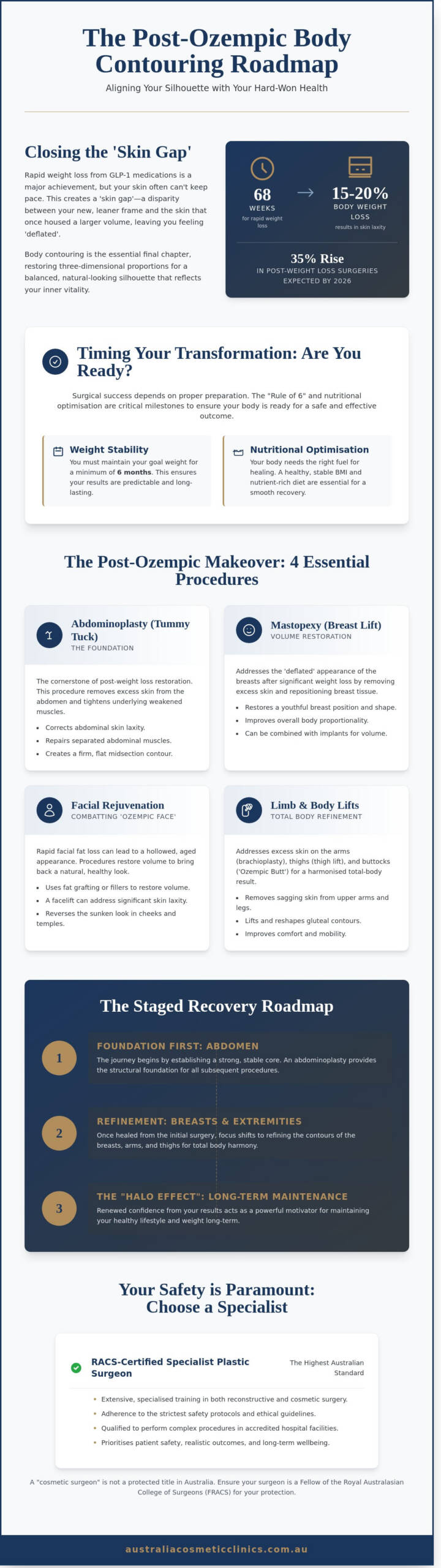
You’ve likely invested months in your health transformation. Reaching your target weight through GLP-1 medications is a profound achievement. However, the rapid nature of this weight loss often creates a unique aesthetic challenge. Unlike traditional dieting, where weight might fluctuate slowly over a decade, GLP-1 therapies can lead to a 15% to 20% reduction in total body weight in as little as 68 weeks. Your skin, which is a living organ with finite elasticity, simply cannot keep pace with this level of change. It’s a physical reality that leaves many feeling incomplete.
This disparity is what we call the ‘Skin Gap.’ It represents the physical distance between your newly lean frame and the envelope of skin that once housed a larger volume. You’ve hit your health goals, yet your reflection may look ‘deflated’ rather than defined. Post ozempic body contouring isn’t about vanity. It’s about closing that gap and ensuring your physical form reflects your hard-won vitality. A Specialist Plastic Surgeon doesn’t just remove skin. They work to restore three-dimensional proportions, ensuring your silhouette is balanced and natural-looking.
For many Sydney patients, an Abdominoplasty (tummy tuck) is the cornerstone of this restoration. It provides a firm foundation for the midsection by tightening underlying muscles and removing redundant tissue. This surgical intervention is often the only way to address the structural changes that occur after massive weight loss. It’s the final bridge between your clinical success and your aesthetic desires.
The Science of Rapid Deflation
When you lose weight rapidly, the subcutaneous fat that once supported your skin disappears. This leaves the dermal collagen matrix stretched and weakened. In our Sydney clinics, we’re seeing an influx of patients concerned with ‘Ozempic Face’ or ‘Ozempic Butt.’ These conditions occur because structural fat pads in the face and glutes diminish, leading to a sunken or sagging appearance. Tissue laxity is the primary challenge for post-GLP-1 patients in 2026.
Beyond Aesthetics: The Functional Benefits of Skin Removal
Excess skin isn’t just a visual concern. It carries a physical burden. Many patients suffer from chronic intertrigo, which is a persistent rash in skin folds, or struggle with hygiene during the humid Sydney summer. Removing this tissue improves mobility and makes exercise more comfortable. Data from a 2023 clinical review indicates that patients who undergo post ozempic body contouring feel a ‘halo effect.’ This renewed confidence acts as a powerful motivator for long-term weight maintenance. You aren’t just changing how you look; you’re changing how you move through the world.
Choosing a surgical path requires a commitment to excellence and safety. Australia maintains some of the highest surgical standards globally, and your journey deserves that level of protection. By consulting with a specialist, you ensure that your transformation is handled with medical precision and artistic sensitivity. The goal is a bespoke result that feels as good as it looks. You’ve done the hard work of losing the weight. Now, it’s time to reclaim your body.
The Post-Ozempic Makeover: 4 Essential Procedures to Restore Your Silhouette
Rapid weight loss via GLP-1 medications often leaves the skin struggling to keep pace with the shrinking fat cells beneath. While the health benefits of losing 15% to 25% of your total body weight are undeniable, the resulting “skin gap” can feel like a final, frustrating hurdle. This is where post ozempic body contouring transitions from a cosmetic desire to a functional necessity. Addressing the physical reminders of your previous weight requires a bespoke surgical plan that prioritises both form and function.
For many patients, the skin doesn’t just sag; it loses the structural integrity required to retract after significant volume loss. Research indicates that reconstructive body contouring is vital for long-term psychological and physical wellbeing after massive weight loss. At Australia Cosmetic Clinics, we focus on four key areas to harmonise your new proportions and restore the tautness you’ve worked so hard to achieve.
The 360 Abdominoplasty: More Than a Tummy Tuck
A standard abdominoplasty addresses the front of the abdomen, but GLP-1 weight loss is rarely localized to one area. You might find that excess skin wraps around your hips to your lower back. A 360-degree approach is particularly effective when planning your post ozempic body contouring, as it treats the body as a three-dimensional unit rather than a series of isolated parts. This circumferential technique removes the entire “belt” of skin, providing a subtle lift to the buttocks and outer thighs while simultaneously repairing muscle diastasis.
We also utilise a technique called “Fat Banking” during this stage. Instead of discarding the fat we harvest, we meticulously process and preserve it. This natural filler is then ready for future use in facial rejuvenation or breast volume restoration, ensuring your body’s own resources help refine your final look. It’s a sustainable approach to bespoke surgical planning that respects your unique biology.
Restoring the Upper Body: Mastopexy and Brachioplasty
Weight loss often leaves breast tissue deflated. In these cases, a simple augmentation with implants can sometimes look heavy or unnatural. Dr. Kohout frequently recommends a mastopexy, or breast lift, to reposition the nipple and reshape the tissue itself. This creates a youthful, perky silhouette without the need for large foreign objects. If you’ve lost 30kg or more, the skin on the upper arms often forms what many call “bat wings.” Our brachioplasty techniques involve placing incisions in the most discreet locations possible to ensure you feel confident in sleeveless clothing.
The goal is always a refined, natural-looking result. We avoid the “overdone” aesthetic by focusing on the underlying anatomy. Whether it’s a facelift to correct the hollowed appearance of “Ozempic Face” or a thigh lift to smooth the extremities, your journey is about revealing the person you’ve worked so hard to become. Most patients wait 6 to 12 months after reaching a stable weight to ensure the highest safety standards and the most predictable outcomes.
Timing Your Transformation: When are You Ready for Surgery?
Achieving your goal weight through GLP-1 therapy is a landmark achievement that deserves celebration. However, the rapid reduction in adipose tissue often leaves the skin unable to snap back, resulting in folds that can obscure your new silhouette. This is where post ozempic body contouring transitions from a possibility to a planned reality. You shouldn’t rush into the operating theatre the moment the scales hit your target. Clinical excellence requires a period of physiological “settling” to ensure your results are both beautiful and permanent.
We adhere to the ‘Rule of 6’ to protect your investment and your health. This protocol requires you to maintain a stable weight within a 2 to 3 kilogram range for at least six months before surgery. Rapid weight fluctuations interfere with wound healing and skin elasticity. Timing your body contouring surgery correctly ensures that the skin we excise stays gone, rather than new laxity developing from further weight loss or gain. Your body needs this time to recalibrate its metabolic rate and nutritional stores after the intensive phase of GLP-1 use.
Nutritional optimization is the hidden pillar of a successful transformation. GLP-1 medications can sometimes lead to suppressed appetites that result in protein deficiencies or low Vitamin D levels. We require your serum albumin to be above 3.5 g/dL and Vitamin D to be at least 50 nmol/L. These markers are essential for collagen synthesis and immune function. Without them, you face an increased risk of wound dehiscence or infection. We view post ozempic body contouring as a collaborative effort between your surgeon and your biology.
Determining Your ‘Goal Weight’ Stability
Operating too early often leads to disappointing long-term results because the skin continues to sag if weight loss persists post-surgery. We generally look for a BMI below 30 to minimize the risk of seromas and respiratory complications during your recovery. It’s a documented fact that weight stability is the #1 predictor of surgical satisfaction in Australia. We focus on your “plateau” phase to ensure the bespoke contours we create remain crisp and defined for years to come.
Medical Clearances and GLP-1 Management
Your safety is our absolute priority, which is why we strictly follow the 2023 AHPRA guidelines regarding patient assessment for elective cosmetic procedures. You’ll need to pause medications like Ozempic or Mounjaro for 7 to 10 days prior to your procedure. These medications slow gastric emptying, which significantly increases the risk of aspiration under general anaesthesia. We’ll work closely with your GP or Endocrinologist to manage this pause, ensuring your blood sugar remains stable while providing a safe window for your anaesthetist to work with total confidence.
It’s vital to remember that surgery is a tool for refinement, not a substitute for further weight loss. We’re here to remove the physical reminders of your previous weight and reveal the hard work you’ve put in. By waiting for the right clinical window, you ensure that your journey ends with the elegant, natural-looking result you’ve envisioned.
The Staged Approach: Planning Your Recovery Roadmap
Your transformation is a marathon, not a sprint. When you’ve achieved significant weight loss, often exceeding 30kg, your skin requires a bespoke plan to reclaim its shape. We structure post ozempic body contouring into three distinct phases to respect your body’s physiological limits and ensure the most natural-looking results. This methodical pacing allows your tissues to settle, ensuring that each subsequent procedure builds upon a stable foundation.
The first step focuses on the foundation: your abdomen and core. By performing a 360-degree lipectomy or a high-definition abdominoplasty, we establish a new midline. This central anchoring is vital because it affects the drape of the skin across your hips and chest. Establishing this core silhouette first allows us to see exactly how much skin remains on the periphery.
Secondary stages address the extremities and breasts. These procedures, such as a mastopexy (breast lift) or brachioplasty (arm lift), are typically scheduled 12 to 24 weeks after your initial surgery. This 3 to 6 month window is essential for your lymphatic system to recalibrate. It reduces the risk of chronic swelling and ensures that your final scars are as discreet as possible. The final refinement stage often involves facial rejuvenation or fat grafting to restore the youthful volume that rapid weight loss can sometimes diminish.
Why You Shouldn’t Do Everything at Once
Safety remains our primary mandate. Clinical data indicates that surgical sessions exceeding 6 hours increase the risk of complications like venous thromboembolism by approximately 25%. We intentionally limit your time under anaesthesia to maintain a premium safety profile. It’s also about managing your body’s inflammatory load. Major surgery triggers a systemic response; giving your body 4 months to return to baseline ensures your immune system is robust for the next phase.
Managing the financial aspect of your journey is also more feasible with a staged approach. Spreading the costs of theatre fees and specialist anaesthetists over 12 months allows for better personal budgeting. It transforms a significant investment into a manageable series of milestones, allowing you to focus on healing rather than financial pressure.
Recovery Logistics for Sydney and Orange Patients
For our patients in Sydney and Orange, the first 14 days post-surgery are the most critical. You’ll need a dedicated support person at home during this window to assist with daily tasks. We provide a comprehensive post-operative kit, but the most important tool you’ll use is your medical-grade compression garment. You’ll wear this for 6 weeks to provide the external pressure necessary to mould your new contours and minimize fluid retention.
Your return to daily life follows a strict timeline to protect your results. Most patients return to sedentary office work within 10 to 14 days, provided they don’t need to lift more than 2kg. However, you must wait a full 6 weeks before resuming heavy lifting or high-impact exercise at the gym. This patience ensures your internal sutures remain intact while your body builds the necessary collagen to support its new shape.
Ready to map out your personal transformation? Book your bespoke consultation at Australia Cosmetic Clinics today and take the first step toward your new silhouette.
Why Choose a Specialist Plastic Surgeon for Your Post-Weight Loss Surgery?
Achieving your weight loss goals through GLP-1 medications is a monumental milestone. However, the physical legacy of rapid weight loss often requires a level of surgical precision that goes beyond standard cosmetic procedures. Selecting the right practitioner is the most critical decision you’ll make in this final stage of your transformation. In Australia, the distinction between a “Cosmetic Surgeon” and a “Specialist Plastic Surgeon” is significant, impacting both your safety and the longevity of your aesthetic results.
A Specialist Plastic Surgeon has completed a minimum of 12 years of medical and surgical education, including at least five years of intensive postgraduate specialist surgical training. This rigorous path is overseen by the Royal Australasian College of Surgeons (RACS), the only body accredited by the Australian Medical Council to train surgeons in plastic and reconstructive surgery. When you choose a specialist, you’re choosing a professional who has met the highest national standards of clinical excellence and ethical conduct.
This principle of choosing trusted, Australian-certified quality extends beyond surgery. As you redefine your image, you might also consider how you see the world. Many people complete their transformation by investing in other high-quality local products, like premium lenses from Australian Made Vision, ensuring every aspect of their new life meets the same high standards.
The Value of Specialist Expertise
Dr. Mark Kohout brings over 25 years of experience to every procedure, focusing on the complex biomechanics of post ozempic body contouring. Skin that has lost its elasticity due to rapid weight loss, often referred to as “Ozempic skin,” presents unique challenges. It’s often thinner and less resilient than skin aged naturally. This requires advanced tension-management techniques and multi-layered suturing to ensure scars remain discreet and the new body contours stay supported over time.
Dr. Kohout’s approach isn’t about a one-size-fits-all solution; it’s about meticulous artistry. By reviewing Dr. Mark Kohout’s gallery, you can see the tangible results of this expertise. These real Australian patient outcomes demonstrate a commitment to natural-looking proportions that honour your individual journey. We focus on restoring the architecture of your body, ensuring that the results look like they belong to you, rather than appearing “overdone” or artificially tight.
Our practice offers a boutique experience that prioritises your comfort and privacy. Whether you visit our Sydney clinic or our Orange location, you’ll find a sanctuary designed for bespoke care. We balance medical precision with a luxury environment, ensuring that you feel supported from your initial inquiry through to your final post-operative check-up. We don’t just perform surgery; we manage your entire recovery with a dedicated team that understands the emotional weight of this transition.
Your Consultation: The First Step Toward Confidence
Your journey toward a refined silhouette begins with a comprehensive, one-on-one consultation. This isn’t a rushed appointment. We take the time to understand your lifestyle, your concerns, and your aesthetic desires. During this session, we utilise personalised 3D imaging technology to help you visualise potential outcomes. This allows for precise surgical planning tailored specifically to your frame, ensuring that every incision is strategically placed for the best possible camouflage.
We provide a clear, transparent breakdown of the surgical plan, including expected recovery timelines and clinical risks. This authoritative yet empathetic approach ensures you’re fully informed and confident in your choices. If you’re ready to address the final step of your weight loss journey, we’re here to guide you. Book your post-weight loss consultation in Sydney or Orange today.
Embracing the Final Chapter of Your Transformation
Achieving significant weight loss through GLP-1 medications is a landmark accomplishment, yet the presence of redundant skin often masks the physical reality of your success. Strategic post ozempic body contouring provides the surgical precision required to address this skin gap and restore your natural proportions. To ensure the safest outcome and most enduring aesthetic, you’ll need to maintain weight stability for at least 6 months before proceeding with a staged surgical plan. This measured approach allows your body to heal effectively between procedures while focusing on a refined, natural-looking silhouette.
Choosing a surgeon with the right credentials is the most critical decision in your recovery roadmap. Dr. Mark Kohout is a Specialist Plastic Surgeon with over 25 years of experience in complex body sculpting. As an AHPRA and FRACS certified professional, he operates from bespoke surgical suites in Sydney and Orange to provide a high-end, boutique medical experience tailored to your unique anatomy. You’ve done the hard work of losing the weight; now it’s time to reveal the results you’ve earned with clinical excellence and artistic care.
Begin your transformation journey with Dr. Mark Kohout
Your new chapter is waiting to be written.
Frequently Asked Questions
How long after stopping Ozempic can I have body contouring surgery?
You should wait until your weight has remained stable for at least 6 months before proceeding with post ozempic body contouring. Surgeons typically recommend stopping GLP-1 medications 1 to 2 weeks before your procedure to manage anaesthesia risks like delayed gastric emptying. Achieving a BMI under 30 increases safety and improves your aesthetic outcome. This stability ensures your skin and tissues are ready for a bespoke transformation that lasts.
Will Medicare or private health insurance cover my skin removal surgery?
Medicare may provide a rebate for skin removal surgery if you meet strict criteria, such as a weight loss of 5 BMI points and documented skin irritation for 3 months. If your procedure qualifies for a Medicare Item Number like 30177, your private health insurance provider might cover the hospital and theatre fees. You’ll need a referral from your GP and clinical photography to support your claim for medical necessity under Australian health standards.
What is the best treatment for ‘Ozempic Face’ in Sydney?
Dermal fillers and fat grafting are the most effective treatments for restoring volume lost in the midface and temples during rapid weight loss. For patients in Sydney, a surgical deep plane facelift offers a more permanent solution by repositioning the underlying tissues for a natural-looking rejuvenation. Clinical data shows that 85% of patients prefer volume replacement to address the hollowed appearance that often follows significant GLP-1 medication use.
How much does post-weight loss body contouring cost in Australia?
The cost of post ozempic body contouring in Australia typically ranges from A$15,000 to A$35,000 depending on the complexity of your surgical plan. This investment includes your surgeon’s fees, anaesthetist costs, and the private hospital facility charge in Sydney. A bespoke quote is provided after your initial consultation; we map out a tailored journey that reflects your specific anatomical needs and desired aesthetic excellence.
Can I combine a tummy tuck with a breast lift after losing weight?
You can certainly combine a tummy tuck with a breast lift to achieve a comprehensive silhouette refinement in a single operative session. This approach, often called a body lift, reduces your total recovery time and provides a balanced, harmonious result across your entire torso. Our surgeons focus on meticulous techniques to ensure your safety during these combined procedures, which usually take 4 to 6 hours under general anaesthesia.
How do I minimize scarring after a body lift or brachioplasty?
You can minimize scarring by following a strict 12-week post-operative protocol that includes silicone gel sheeting and avoiding UV exposure for 12 months. We utilize advanced suturing techniques to place incisions in discreet areas, such as along the bikini line or under the arm. Clinical studies indicate that early intervention with laser therapy can improve scar texture by 40% within the first year of your recovery journey.
Is a body lift safe if I am still taking weight loss medication?
Undergoing a body lift while still taking GLP-1 medication requires a coordinated plan with your surgical team to mitigate specific anaesthetic risks. You must disclose your full dosage history, as these medications slow digestion and can lead to complications during intubation. Most Australian surgical guidelines advise a 14-day pause of the medication before your surgery date to ensure your stomach is empty and your safety is prioritized.

