Recovery after Gynecomastia Surgery / Male Breast Reduction
Introduction
Undergoing gynecomastia surgery, also known as male breast reduction, is a significant step towards addressing concerns related to excessive breast tissue. The recovery after gynecomastia process plays a crucial role in achieving the optimal results. This blog, written with insights from Dr Mark Kohout – a specialist plastic surgeon in Sydney – provides practical guidance for navigating the recovery journey effectively. With extensive experience in performing male breast reduction, Dr Kohout provides guidance and surgical care tailored to support each patient’s recovery needs and individual goals.
Recovery also depends on the surgical technique used. Chest liposuction primarily addresses excess fat, while gynaecomastia surgery may also involve removing glandular breast tissue or excess skin. The extent of treatment can affect wound care, swelling, compression garment use and activity restrictions.
What to Expect Immediately After Male Breast Reduction Surgery
Planning for recovery begins before the operation. Patients can review our preparing for surgery guide for information about arranging support, reviewing medications and making practical preparations before their procedure.
In the first 24–48 hours following surgery, patients can expect a mix of physical and emotional experiences. Here’s what typically occurs:
- Physical Symptoms:
Mild to moderate pain, swelling, and bruising are common. These symptoms are part of the body’s natural healing response. Patients may also feel drowsy due to anaesthesia and pain relief medications. - Postoperative Care:
It’s essential to have a caregiver or support person during this period to assist with daily activities such as meal preparation, medication reminders, and transportation to and from medical check-ups. - Instructions from Your Surgeon:
Dr Kohout will provide detailed instructions regarding wound care, prescribed medications, and the use of a compression garment to manage swelling and support the chest area during the healing process.
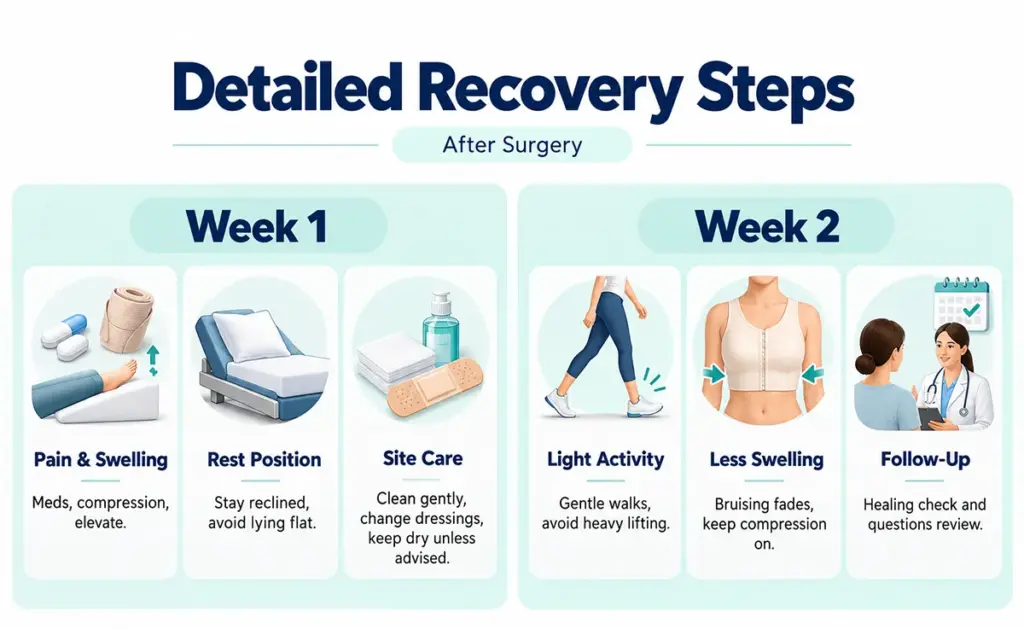
Detailed Recovery Steps
Week 1 After Surgery
- Managing Pain and Swelling:
Dr Kohout will prescribe medications, such as pain relievers and antibiotics, to manage discomfort and reduce the risk of infection. Swelling can be alleviated by wearing the recommended compression garment and keeping the upper body elevated. - Rest and Proper Positioning:
Rest is paramount during this initial stage. Patients should avoid lying flat on their back and instead use supportive pillows to maintain a slightly reclined position, which promotes better circulation and reduces swelling. - Caring for the Surgical Site:
Follow the surgeon’s instructions for cleaning the surgical area and changing bandages. Avoid getting the area wet unless specifically advised.
Week 2 After Surgery
- Gradual Return to Light Activities:
By the second week, most patients begin to regain their energy and can resume light activities such as walking. However, heavy lifting or intense physical exertion should still be avoided. - Swelling and Bruising Update:
Patients typically notice a reduction in swelling and bruising during this time. The compression garment remains essential for maintaining proper support and promoting a smoother chest contour. - Follow-Up Appointment:
A follow-up appointment with Dr Kohout will be scheduled to assess progress, address concerns, and ensure the recovery is on track.
Take our Plastic Surgery Quiz
Do’s and Don’ts During Recovery After Gynecomastia Surgery
Do’s:
- Follow Dr Kohout’s postoperative instructions carefully.
- Engage in light activities like gentle walking to improve circulation.
- Wear the recommended compression garment as directed.
- Keep the surgical area clean and dry to prevent infection.
- Stay hydrated and eat a balanced diet to support healing.
Don’ts:
- Avoid heavy lifting, pushing, or pulling during the recovery period.
- Do not expose the surgical area to direct sunlight, as it can darken scars.
- Refrain from smoking or consuming alcohol, as these can delay healing.
- Avoid swimming or soaking in baths until cleared by Dr Kohout.
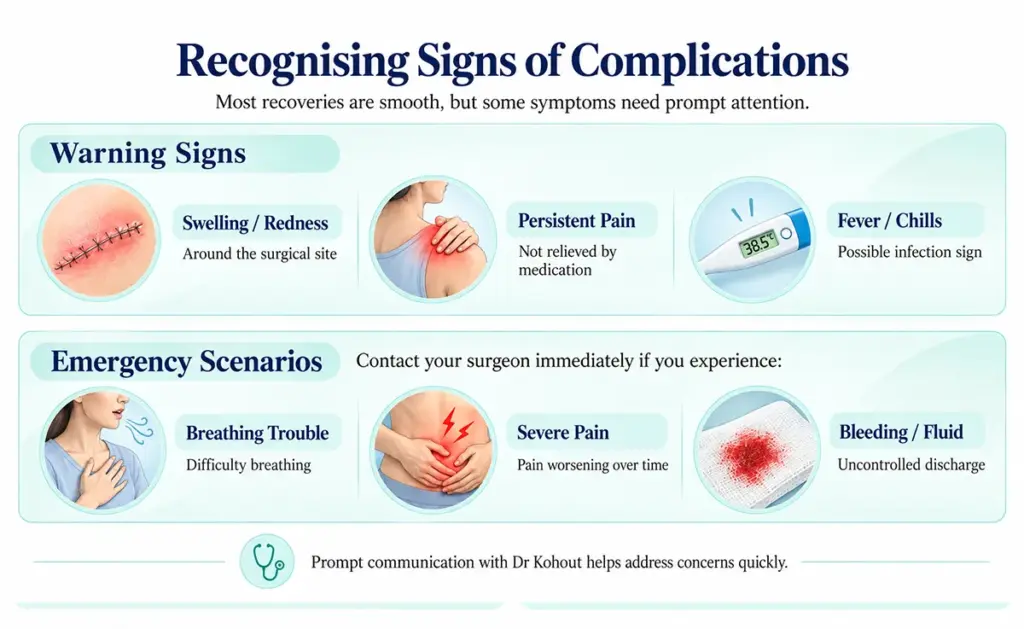
Recognising Signs of Complications
While most recoveries are smooth, it’s important to be aware of potential complications.
Warning Signs:
- Excessive swelling or redness around the surgical site.
- Persistent or increasing pain that doesn’t respond to prescribed medication.
- Fever or chills, which may indicate an infection.
Emergency Scenarios:
Contact your surgeon immediately if you experience:
- Difficulty breathing.
- Severe pain that worsens over time.
- Uncontrolled bleeding or fluid discharge from the surgical site.
Prompt communication with Dr Kohout ensures any concerns are addressed swiftly and effectively.
Long-Term Care for Lasting Results
To maintain the results of gynecomastia surgery:
- Healthy Lifestyle: Maintain a stable weight through balanced nutrition and regular exercise.
- Scar Care: Use scar creams or silicone sheets as advised to promote fading. For more tips on managing and improving the appearance of post-surgery scars, read our guide on Managing Gyno Scars After Male Chest Surgery.
- Follow-Up Visits: Regular check-ups with Dr Kohout help monitor your progress and address any ongoing concerns.

FAQs About Recovery After Gynaecomastia Surgery
How long until I see the final results?
Gynaecomastia surgery leaves permanent scars. Their position and extent depend on the surgical technique, including whether glandular tissue or excess skin is removed. Scars usually fade over time, but their appearance varies between patients.
When can I resume driving, working, or exercising?
Driving and non-strenuous work can usually resume after one week, while exercise should wait until 4–6 weeks, depending on your progress.
Is it normal to feel uneven sensations or tightness?
Yes, temporary numbness or tightness is common and usually resolves within a few weeks.
Will there be visible scars?
Scars are minimal and typically fade over time with proper care.
What if I experience discomfort wearing the compression garment?
Adjust the fit as needed, but consult Dr Kohout if the discomfort persists.
Can I take over-the-counter pain relief?
Only use medications approved by your surgeon, as some can increase the risk of bleeding.
Medical References
- American Society of Plastic Surgeons (ASPS):
- Gynecomastia Surgery
- This page offers an overview of the procedure, recovery expectations, and post-operative care.
- Mayo Clinic:
- Gynecomastia: Diagnosis and Treatment
- This resource includes information on treatment options and recovery tips.
- Cleveland Clinic:
- Gynecomastia Surgery
- This article discusses what to expect before, during, and after surgery.
- Healthline:
- What to Expect After Gynecomastia Surgery
- A comprehensive guide on recovery phases, care tips, and potential complications.
- American Board of Cosmetic Surgery:
- Gynecomastia Surgery Guide
- This page provides an overview of male breast reduction, including treatment options, expected results, and what to anticipate during recovery.
Final Thoughts
Recovery after gynecomastia surgery is a unique experience for each individual. While challenges like swelling or tightness are common, they’re temporary and part of the healing process. Open communication with your surgeon, patience, and adherence to postoperative guidelines are key to achieving the desired outcome.
Further Reading
Male Breast Reduction Sydney
Dr Mark Kohout
Male Surgery Price List
Price List
Recovery after Plastic Surgery
A Guide
Preparing for Your Surgery
Info Page
What's Next?
Whether you are ready for a professional evaluation or just have a quick question, we’ve made it easy to connect with our team. Choose the option that best fits your needs below.
Book your Consultation
Take the first step toward your goals by filling out the brief form below. This information helps us understand your specific needs so we can make the most of our time together during your session. Once you submit your details, a member of our team will review your request and reach out shortly to confirm your appointment.
Patient Photo Assesment
Reviewing photographs may help the clinical team understand the areas you would like to discuss and prepare for your consultation. A photo assessment does not replace an in-person clinical examination or determine suitability for surgery.
Tips for Uploading Photos
ASK A FRIEND
Friend takes photo
GOOD LIGHTING
Plain wall, bright light
ALL ANGLES
Front / sides/ 45°
CLEAR & SHARP
No portrait mode
SEND ORIGINALS
No edits or compression
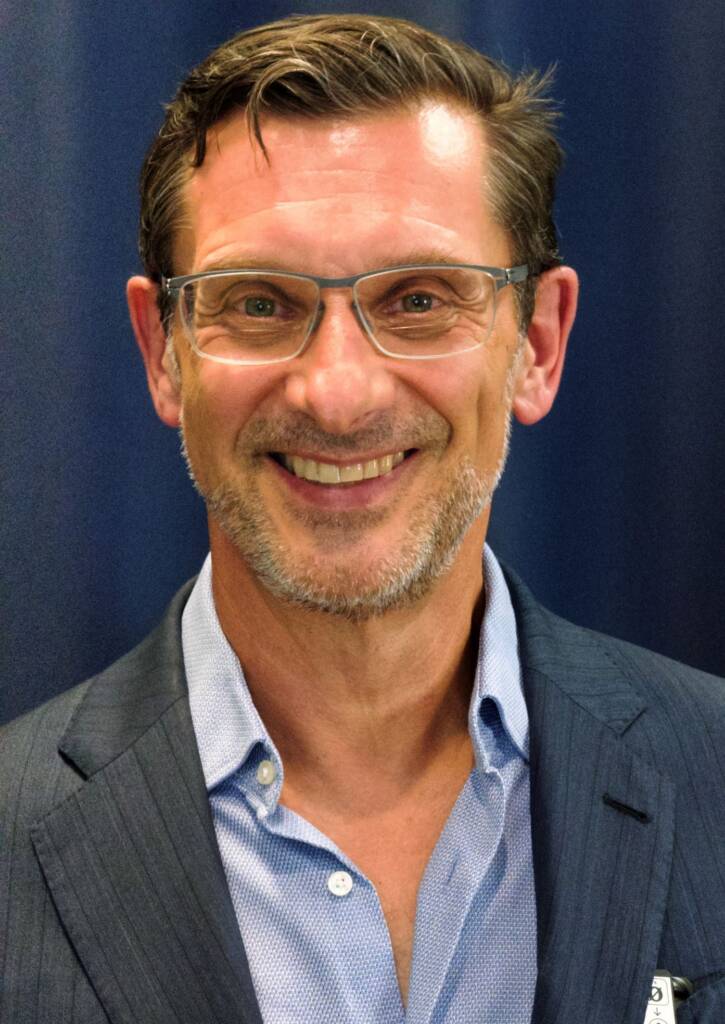
Dr. Mark Kohout
Dr. Mark Kohout (MED0001133000) is a fully qualified specialist plastic and reconstructive surgeon with over 25 years of experience, based in central Sydney.
Trained in Great Britain, Australia, and the U.S., he co-founded Australia Plastic Surgery. Specialising in breast, genital, and male breast surgeries, he is a certified member of the Australian Society of Plastic Surgeons (ASPS) and the Royal Australian College of Surgeons (RACS).
Dr. Kohout has appeared in media like The Biggest Loser and has published several articles in his field.



Accreditations