Table of Contents
Liposuction, more commonly known as lipo, has long been a preferred surgical option for individuals seeking to reduce isolated pockets of fat that remain resistant to diet and exercise. The technique can be highly effective in reshaping targeted areas of the body, particularly the abdomen, flanks, thighs, and arms. However, many patients who consider liposuction may also present with a condition called diastasis recti, more often described as split abdominal muscles. This is particularly common in post-pregnancy patients, although it can also affect men and women who have experienced major fluctuations in weight or have a predisposition to weaker connective tissues.
For these individuals, the question naturally arises – can lipo be performed safely and effectively when split abdominal muscles are present? According to Dr Mark Kohout, a Specialist Plastic Surgeon based in Sydney, the answer depends on the specific anatomy and goals of the patient. In this article, Dr Kohout explores this topic in depth, offering insights into when liposuction is suitable, when additional procedures may be considered, and how a tailored approach supports both safety and satisfactory outcomes.
Understanding Split Abdominal Muscles
Diastasis recti refers to the separation of the rectus abdominis muscles, which run vertically down the centre of the abdomen. These muscles are connected by a fibrous structure known as the linea alba. In cases of diastasis recti, this connective tissue stretches and thins, allowing the two sides of the muscle to pull apart. The result is a visible or palpable gap that can affect the overall contour of the abdomen. While commonly associated with pregnancy due to the stretching of the abdominal wall to accommodate a growing uterus, this condition can also be observed in men and women who have experienced increased intra-abdominal pressure from heavy lifting, obesity, or repeated straining.
Patients with diastasis recti may notice a doming or protruding appearance of the midsection, particularly when engaging their abdominal muscles. Some describe a sensation of core weakness or lack of support through the trunk. In more advanced cases, functional symptoms such as lower back discomfort or difficulty with physical activity may also be present. Importantly, diastasis recti is not a hernia, although it may be mistaken for one. The difference lies in the fact that diastasis recti does not involve an actual tear or opening in the abdominal wall, but rather a thinning and widening of the connective tissue between muscles.
Why Patients Seek Help
The aesthetic and functional implications of diastasis recti are often the driving force behind a patient’s decision to seek surgical advice. Many patients feel that their abdomen continues to protrude or appear rounded, even after regaining their pre-pregnancy weight or engaging in regular abdominal exercises. Others may find that their core stability has been compromised, making it more difficult to perform daily tasks or maintain proper posture. In these situations, it’s not uncommon for patients to assume that excess fat is the primary issue – leading them to explore liposuction as a potential solution.
However, as Dr Mark Kohout frequently explains during consultations at his Sydney clinic, the true cause of abdominal contour concerns is not always fat-related. If muscle separation is the primary factor, liposuction alone may not address the full extent of the problem. This is why a clinical examination by a Specialist Plastic Surgeon is so important – to determine whether fat removal, muscle repair, or a combination of both is the most appropriate course of action.
What Lipo Can And Can’t Do
Liposuction is a body contouring procedure, not a weight loss method or a solution for muscle abnormalities. Its primary goal is to remove excess subcutaneous fat – fat that sits beneath the skin and above the muscles – using small cannulas and suction devices. The result is a more defined appearance in targeted areas, most commonly the abdomen, hips, thighs, arms, and back. There are several variations of liposuction, including traditional, ultrasound-assisted, and power-assisted techniques, which Dr Kohout may recommend depending on the patient’s needs.
What liposuction does not do, however, is tighten muscles or repair internal structural issues. It does not address the separation between the rectus abdominis muscles, nor can it bring those muscles back together. In patients with diastasis recti, this means that even after fat is removed from the surface layer, the abdominal wall may still appear rounded or distended. This is not due to surgical failure but rather the persistence of an underlying muscular condition that liposuction alone is not designed to treat.
Dr Mark Kohout points out that some patients feel disappointed with the outcome of lipo when split muscles are not taken into account prior to surgery. For this reason, he places a strong emphasis on anatomical diagnosis before proceeding with any fat-reduction treatment. Ensuring that patients understand both the capabilities and limitations of liposuction is essential to achieving realistic expectations and long-term satisfaction.
Are You A Candidate For Lipo With Split Muscles?
Determining whether a patient with split muscles is a suitable candidate for liposuction involves a careful and individualised assessment. Dr Kohout conducts a thorough physical examination at his Sydney clinic, often using palpation and visual cues to detect diastasis recti. If needed, additional imaging or diagnostic tools may be utilised to confirm the degree of muscle separation.
Mild cases of diastasis recti – where the muscle gap is small and the abdominal wall retains good tone – may not preclude liposuction as a treatment option. In these situations, patients may still benefit from fat removal if their primary concern is volume reduction and not muscle tightening. This scenario is most common in individuals who are otherwise fit, have firm skin, and have no symptoms of core dysfunction.
For patients whose muscle separation is more pronounced or who report symptoms such as back pain or weakness, liposuction may need to be paired with a second procedure to address the deeper issue. In all cases, Dr Kohout ensures that patients fully understand the potential outcomes of each option before proceeding with surgery. He believes that an open and honest discussion, grounded in anatomical reasoning, is the foundation of responsible plastic surgical care.
When Combined Procedures May Be Needed
For patients who present with both subcutaneous fat and moderate to severe diastasis recti, a combined surgical approach may provide the most effective solution. In these cases, liposuction is used to remove fat and contour the surrounding areas, while a muscle repair procedure – often part of a standard abdominoplasty – is performed to restore the integrity of the abdominal wall. During surgery, the rectus muscles are brought back together at the midline using permanent sutures, effectively narrowing the muscle gap and improving both form and function.
This comprehensive approach is particularly beneficial for individuals who have experienced significant changes to their abdominal anatomy, whether due to multiple pregnancies, major weight loss, or long-term muscle strain. Dr Kohout, with his extensive experience in body contouring procedures, performs these operations in accredited Sydney surgical centres using up-to-date methods and strict safety protocols.
Patients often report improvements not only in abdominal shape but also in posture, physical stability, and core strength after combined procedures. While individual outcomes vary, combining muscle repair with liposuction allows for a more holistic correction of both the internal structure and the external contour.
Recovery And Aftercare Considerations
Recovery from liposuction is generally quicker than from combined procedures involving muscle repair. For patients undergoing lipo alone, mild swelling, bruising, and discomfort are expected in the early days. Compression garments are typically worn to support healing and reduce fluid accumulation. Most patients can return to work and light activity within a week, although exercise and strenuous movements may need to be delayed for several weeks.
When liposuction is combined with muscle repair, the recovery process becomes more involved. Patients should expect a longer rest period, greater initial discomfort, and more specific movement restrictions. Lifting, twisting, and intense physical activity are generally avoided for at least 4 to 6 weeks. Follow-up appointments with Dr Kohout in Sydney allow for careful monitoring of the healing process, ensuring that incisions heal well and that the repaired muscles maintain their structural support.
Regardless of the surgical pathway chosen, post-operative care is a priority. Dr Kohout’s team provides each patient with comprehensive recovery instructions and remains available to address questions or concerns throughout the healing process. Long-term results depend on multiple factors, including tissue quality, adherence to care instructions, and overall health. However, patients who maintain stable weight and follow surgical guidance typically experience long-lasting improvements in both appearance and comfort.
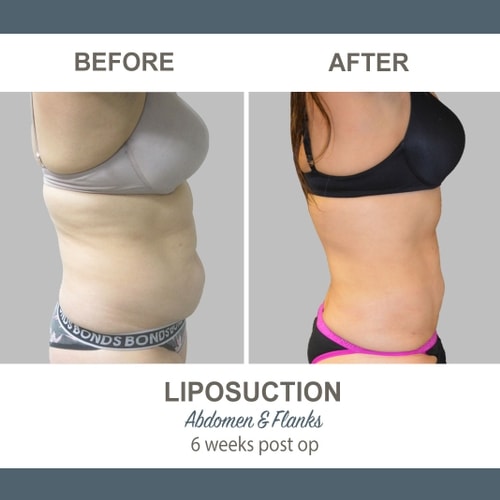
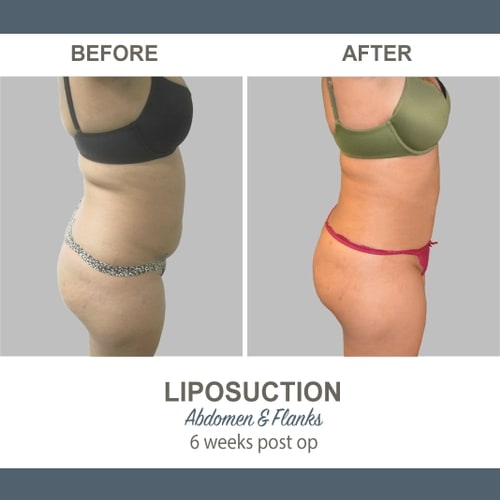
Abdomen Liposuction Before and After Photos
FAQs About Split Muscles and Liposuction
If I can flex my abs, does that mean my muscles aren’t split?
Not necessarily. Some patients with diastasis recti can still engage their abdominal muscles to a degree, especially if the separation is moderate. However, the presence of muscle function doesn’t rule out structural separation, which may still affect contour and core stability. A physical examination is essential to assess the underlying muscle alignment.
Will liposuction make my muscle separation worse over time?
Liposuction does not directly affect the muscles, but in cases of significant diastasis, removing the overlying fat may highlight the underlying bulge more clearly. This is why an assessment by a Specialist Plastic Surgeon is important to determine whether a combined approach may prevent that issue.
Can exercise fully correct diastasis recti, or Is surgery the only option?
While targeted core exercises may help strengthen the abdominal area and improve symptoms in mild cases, they do not physically close the muscle gap. For more pronounced separation, surgical repair remains the most predictable method to realign the muscles.
Will liposuction alone change the way my core feels or functions?
No. Liposuction does not enhance core strength or internal muscle support. Patients with diastasis recti often find that while external fat is removed, the feeling of core weakness or instability remains if the muscles themselves are not repaired.
Can split muscles cause a “still pregnant” look even if I’m not overweight?
Yes. Many patients with diastasis recti describe their abdomen as looking “bloated” or “pushed out” even when they have little body fat. This is due to the forward pressure from abdominal contents against the separated muscles, not excess fat.
If I’ve already had liposuction and still see a bulge, could it be diastasis recti?
It’s possible. Some patients discover their muscle separation only after fat has been removed and the underlying issue becomes more visible. A physical evaluation can help determine if a past procedure missed an important part of the diagnosis.
Can I still be a good candidate for liposuction if I don’t want muscle repair?
In some cases, yes. If the separation is mild and your main concern is isolated fat removal, liposuction can still offer improvement. However, it’s important to understand the likely outcomes and accept that the overall abdominal profile may not be as flat or firm without addressing the underlying muscle separation.
Medical References
- Imaging of Muscle Injuries in Sports Medicine: Sports Imaging Series – Radiology – https://pubs.rsna.org/doi/full/10.1148/radiol.2017160267
- Terminology and classification of muscle injuries in sport – British Journal of Sports Medicine – https://bjsm.bmj.com/content/47/6/342
- Muscle Injuries: A Brief Guide to Classification and Management – PMC, National Institutes of Health – https://pmc.ncbi.nlm.nih.gov/articles/PMC4592039/
- Muscle Injuries – Physiopedia – Physio-Pedia (Educational Resource) – https://www.physio-pedia.com/Muscle_Injuries
- Muscle Injury – Physiopathology, Diagnosis … – PMC, National Institutes of Health – https://pmc.ncbi.nlm.nih.gov/articles/PMC4799202/
- Evidence-based Treatment of Muscle Injuries – Swiss Journal of Medicine and Medical Specialties (SEMS) – https://sems-journal.ch/1177
- Muscle injury: Review of experimental models – ScienceDirect – https://www.sciencedirect.com/science/article/abs/pii/S1050641113001788
Making An Informed Decision
If you are concerned about abdominal fullness or bulging and are considering liposuction, it’s important to understand that not all abdominal shapes are caused by fat alone. For many individuals, particularly women after pregnancy, split abdominal muscles are a contributing factor – and sometimes the primary cause. While lipo can play a valuable role in refining body contour, it cannot correct muscular separation on its own.
As a Specialist Plastic Surgeon with over 25 years of experience, Dr Mark Kohout offers honest, detailed assessments at his Sydney-based practice, helping patients navigate their options with confidence and clarity. His approach is not to offer a one-size-fits-all solution, but rather to develop an individualised surgical plan that addresses both surface concerns and deeper structural issues.
Whether liposuction alone is appropriate for your needs or a combined procedure may offer more comprehensive results, the first step is an informed consultation. Dr Kohout and his team are committed to guiding you through every stage of the process, from diagnosis to recovery, with professionalism, transparency, and care.
To learn more about lipo and whether it is suitable in the presence of split abdominal muscles, contact Dr Mark Kohout’s clinic in Sydney and book your personalised consultation.
Further Reading
- Read more about Arm Reduction
- Read more about Thigh Lift
- Read more about Body Lift
- Read Dr Mark Kohout’s Blog on Liposuction Techniques
- Read Dr Mark Kohout’s Blog on Laser Liposuction: Your Options
- Read Dr Mark Kohout’s Blog on High-Definition Liposuction: A Guide
- Chest Liposuction Guide
Related Blog Posts
Can Patients With Split Muscles Have Liposuction?
Table of Contents Liposuction, more commonly known as lipo, has long been a preferred surgical option for individuals seeking to reduce isolated pockets of fat that remain resistant to diet
FAQs of Abdominoplasty after Weight Loss in Australia
FAQs of Abdominoplasty after Weight Loss in Australia Table of Contents Abdominoplasty after significant weight loss can be a transformative procedure, helping individuals address the excess skin and improve muscle

Dr. Mark Kohout
Dr. Mark Kohout (MED0001133000) is a fully qualified specialist plastic and reconstructive surgeon with over 25 years of experience, based in central Sydney.
Trained in Great Britain, Australia, and the U.S., he co-founded Australia Plastic Surgery. Specialising in breast, genital, and male breast surgeries, he is a certified member of the Australian Society of Plastic Surgeons (ASPS) and the Royal Australian College of Surgeons (RACS).
Dr. Kohout has appeared in media like The Biggest Loser and has published several articles in his field.



Accreditations