Breast Reduction
(Reduction Mammoplasty) Sydney
Breast reduction, also called reduction mammoplasty, is a surgical procedure that may reduce breast volume and reshape the breast by removing a planned amount of breast tissue, fat, and skin. Where clinically appropriate, the procedure may also involve repositioning the nipple areola complex. Breast reduction is usually performed under general anaesthesia in an accredited hospital or surgical facility, with the surgical plan tailored to individual anatomy, skin quality, and clinical considerations.
At Australia Cosmetic Clinics, Dr Anthony Barker, Specialist Plastic and Reconstructive Surgeon, provides consultation and assessment for breast surgery. Breast reduction is approached with structured assessment, clear explanation, and individualised planning. Consultation focuses on suitability, technique options, scarring, recovery requirements, and potential risks, so patients can make informed decisions about care.
All photographs have been used with the patient’s express written permission. The information on this site is not intended to replace expert medical advice. There are risks associated with any surgical or invasive operation. You should obtain the advice of a licensed health professional before continuing.
What is Breast Reduction (Reduction Mammoplasty)?
Breast reduction reduces breast volume by removing a planned amount of breast tissue and skin. The remaining tissue is reshaped to create a smaller breast size in line with the agreed surgical plan. In many cases, the nipple and areola are repositioned to sit appropriately on the reshaped breast, while maintaining blood supply and tissue viability where possible.
Breast tissue is made up of glandular tissue, fat, connective tissue, and skin, and the proportion of these components varies between individuals. Differences in tissue composition and skin elasticity influence breast weight, breast movement, and how breast position changes over time. Pregnancy, breastfeeding, hormonal changes, and weight fluctuations can also affect breast size and skin recoil, which is why planning is individualised.
- Breast reduction is not designed as a method of weight reduction
- Surgery can reduce volume and alter shape, but cannot eliminate natural asymmetry entirely
- Future changes may still occur due to pregnancy, weight variation, hormonal influences, and natural ageing
Breast reduction differs from a breast lift in that reduction mammoplasty removes a planned volume of breast tissue and skin, whereas a breast lift primarily addresses breast position and skin excess with less emphasis on reducing volume.

Who May Consider Breast Reduction?
Breast reduction may be considered by individuals who experience ongoing concerns related to breast size and weight that have not responded to non surgical measures. Some people explore the procedure due to discomfort that may be associated with breast weight, while others focus on practical issues such as garment fit, recurrent skin irritation under the breast fold, or difficulty participating in certain activities due to breast movement.
Symptoms such as upper back or shoulder discomfort can have multiple contributing factors, including posture, muscle tension, spinal conditions, and work related strain. A consultation helps assess whether breast size is likely to be a significant contributor and whether breast reduction is an appropriate option in the individual’s circumstances.
Common reasons people explore breast reduction include
- Neck, shoulder, or upper back discomfort that may be associated with breast weight
- Bra strap indentation or pressure that remains difficult to manage with garment changes
- Skin irritation beneath the breast fold, including recurrent rashes
- Difficulty with certain activities due to breast movement or breast weight
- Clothing fit concerns and difficulty finding supportive bras
- Concerns about breast proportion relative to frame where breast volume feels difficult to manage day to day
Take our Plastic Surgery Quiz
How Is Suitability For Breast Reduction Assessed?
Suitability for breast reduction is assessed during consultation with a qualified Specialist Plastic Surgeon. The consultation is designed to review clinical factors, examine breast anatomy, and clarify the individual’s priorities. The treating surgeon may assess breast position, nipple position, degree of breast descent, skin quality, and any asymmetry or chest wall differences. These features are common and can influence planning.
Consultation also includes an expectations discussion. Breast reduction can reduce breast volume and adjust shape, but symptom improvement cannot be guaranteed, and scarring cannot be avoided. Patients are guided through what can reasonably be changed and what cannot, including the possibility of sensation changes and impacts on breastfeeding capacity in some cases.
Consultation commonly reviews:
- Overall health and medical conditions that may affect surgery or recovery
- Current medications and supplements, including products that may increase bleeding risk
- Smoking or nicotine exposure, as nicotine increases wound healing complication risk
- Surgical history, including previous breast procedures
- Weight stability over time, as changes after surgery can affect breast size and shape
- Breast screening history and whether imaging is recommended before surgery
- Future pregnancy and breastfeeding plans
Patients seeking cosmetic breast reduction surgery require a referral from an independent Australian-registered GP or other eligible medical specialist before consultation. Cosmetic surgery also requires at least two pre-operative consultations, including at least one in-person consultation with the surgeon performing the procedure. Following informed consent, a minimum seven-day cooling-off period applies before surgery can be booked or a deposit paid.
Is Breast Screening Or Imaging Needed Before Breast Reduction?
Breast screening history forms part of surgical planning. Depending on age, personal history, and risk factors, the treating surgeon may recommend imaging such as ultrasound and or mammography before surgery. This supports appropriate preoperative assessment and helps guide safe planning.
If tissue is removed, some practices send tissue for pathology assessment based on clinical practice and individual history. The treating surgeon can explain what is usual in the specific circumstances and how results are handled.
Screening discussions may include
- Whether preoperative imaging is recommended
- Timing of imaging relative to surgery
- Family history and other relevant risk factors
- Pathology handling of removed tissue where applicable
How Should You Prepare For Breast Reduction Surgery?
Preoperative preparation is tailored to the individual’s health profile and the planned technique. Patients may receive guidance on medication use, fasting before anaesthesia, and steps that support recovery planning at home. Depending on medical history, advice may include pausing specific supplements or medications where clinically appropriate.
Practical preparation is also important. Planning transport, home support, time away from work, and a comfortable recovery space helps patients manage the early recovery period more effectively, particularly when lifting and reaching restrictions apply.
Preparation planning may include:
- Arranging transport home and a support person if discharged the same day
- Planning time away from work and modifications to household tasks
- Preparing a recovery area with easy access to supplies
- Obtaining a supportive post operative bra if recommended
- Reviewing nicotine requirements, including cessation timeframes where advised
What Do You Need to Know About Anaesthesia and Surgical Markings?
Breast reduction is typically performed under general anaesthesia, meaning the patient is asleep during surgery. The anaesthetist reviews the medical history and discusses anaesthetic risks, as well as strategies for managing nausea and discomfort after surgery.
Before surgery, skin markings are commonly made while the patient is standing. These markings guide incision placement, reshaping, and planned nipple position. Final technique decisions can also be influenced by intraoperative findings and tissue characteristics identified during surgery.
Anaesthesia planning commonly includes
- Review of medical history and current medications
- Discussion of relevant anaesthetic risks
- Planning for nausea control and pain management
Markings are used to guide
- Incision placement and scar pattern
- Tissue reshaping plan
- Nipple areola position planning
What Are Your Incision Patterns and Technique Options?
Incision patterns vary and are chosen based on the degree of reduction planned and how much skin excess needs to be managed. The treating surgeon explains which approach is recommended and why, including scar placement, expected scar length, and how the approach relates to breast shape goals and tissue characteristics.
Each incision pattern involves trade-offs. For example, shorter scars may not be suitable when there is significant skin excess or when larger reshaping is required. Discussion during consultation helps align the technique with anatomy and priorities while maintaining safe planning.
Common approaches include
- Periareolar approach, incision around the areola, suitable in selected cases with limited skin excess
- Vertical approach, incision around the areola plus a vertical incision to the breast crease, used for a range of reductions
- Wise pattern approach, incisions around the areola, vertically to the crease, and along the breast crease, often used when more skin management is needed
How Are Breast Tissue, Shape And Nipple Position Managed During Surgery?
The procedure typically includes removal of a planned amount of breast tissue and skin, reshaping of remaining tissue, and repositioning of the nipple and areola when required. In many cases, the nipple and areola remain attached to underlying tissue to help preserve blood supply, where feasible for the planned approach.
The amount of tissue removed varies between individuals and is based on anatomy, the degree of reduction planned, and what can be done safely. Symmetry is approached through careful measurements and planning, but perfect symmetry cannot be guaranteed because natural differences in breast tissue and chest wall shape are common.
Planning considerations include
- Breast composition and tissue density
- Skin quality and the degree of skin excess
- Nipple position and degree of breast descent
- Existing asymmetry and chest wall differences
- Safety considerations related to blood supply and wound healing
Surgical management may involve
- Temporary drains in selected cases, depending on technique and intraoperative factors
- Dressings after closure and fitting of a supportive post operative bra
How Long Does Breast Reduction Surgery Take, And When Can You Go Home?
Surgical time varies depending on individual anatomy, the extent of reduction required, incision pattern, and whether other procedures are performed at the same time. Many procedures take several hours, with some references noting around two to four hours depending on the plan. Discharge timing is based on recovery from anaesthesia, pain control, nausea control, and clinical assessment by the treating team.
Some patients return home the same day, while others stay overnight, depending on clinical factors and the surgeon’s plan. Patients are provided with instructions about garments, wound care, activity restrictions, and follow-up scheduling.
Discharge planning considers:
- Recovery from anaesthesia and stable observations
- Pain and nausea management
- Home support availability
- The extent of surgery and the surgeon’s preference
Patients are commonly provided with:
- Wound care and dressing instructions
- Support bra guidance
- Follow-up appointment schedule
- Activity restrictions and staged return to tasks
What Should You Expect During Breast Reduction Recovery?
Recovery after breast reduction is gradual and varies between individuals. Bruising and swelling are expected in the early post operative period, and swelling reduction and scar maturation may continue over several months. Breast shape can continue to settle over time as swelling reduces and tissues adapt.
The treating surgeon’s post operative instructions take priority because they are tailored to the technique used and the patient’s healing progress. Follow-up appointments are used to monitor wounds, swelling, and scar development, and to guide the staged return to daily activities.
Early recovery may involve:
- Swelling and bruising
- Tightness across the chest
- Variable discomfort managed with prescribed or recommended medication
- Temporary changes in nipple or breast sensation
- Tiredness after anaesthesia and early healing
Common early guidance includes:
- Avoiding heavy lifting and repetitive overhead movement initially
- Gentle walking as advised to support circulation
- Wearing a supportive post operative bra as directed
How Are Wounds, Follow-Up Care And Scar Maturation Managed After Breast Reduction?
Patients receive instructions about dressings, showering, and supportive garments. Follow-up appointments allow the treating surgeon to assess wound healing and advise on when and how to progress activity, and when scar care measures may be appropriate.
Scars are permanent and change in appearance over time. Scar appearance varies between individuals and is influenced by genetics, skin type, wound tension, aftercare, and nicotine exposure. When appropriate and once incisions have sealed, scar management after breast reduction may include silicone based products and sun protection, introduced according to the treating surgeon’s guidance.
Follow-up is used to
- Check wound healing and manage dressings
- Monitor swelling and breast settling
- Provide guidance on scar care timing
- Address questions about symptoms and activity
Scar maturation considerations include
- Scar appearance may change for months
- Individual variation is expected
- Sun protection is commonly advised once appropriate
When Can You Return To Work And Daily Tasks After Breast Reduction?
Time away from work depends on the physical requirements of the role. Some people with desk-based work return after a shorter period, while roles involving lifting, reaching, or physical exertion often require longer or modified duties. Planning ahead for household support can be particularly helpful when daily tasks involve lifting children, carrying groceries, laundry, or cleaning.
Driving is usually considered once the patient can safely perform an emergency stop and is no longer taking medication that may impair reaction time. The treating surgeon provides individual guidance based on recovery progress and comfort.
Practical planning may include:
- Support at home for lifting and carrying tasks
- Adjusting work duties or scheduling leave
- Planning transport for early follow-up visits
- Reviewing driving readiness with the treating team
When Can You Resume Exercise After Breast Reduction?
Activity is typically reintroduced in stages. Gentle walking is usually appropriate early, while higher intensity activity is delayed until healing is progressing well. Upper body strength training and high impact activities are commonly delayed longer than lower intensity movement, particularly when incisions and reshaping require protection during early healing.
The treating surgeon guides timing based on wound healing, swelling, the technique used, and the patient’s baseline conditioning. Structured progression helps reduce strain on healing tissues and supports a safe return to usual activity.
Factors that influence activity timing include
- Wound healing and swelling reduction
- The degree of reshaping required
- The type of exercise planned
- Individual comfort and range of movement
Many patients are advised to
- Start with gentle walking as directed
- Avoid heavy lifting until cleared
- Reintroduce more demanding activity gradually under medical guidance
Can Breast Reduction Affect Sensation Or Breastfeeding?
Sensation in the nipple or breast skin may change after the breast surgery. Temporary changes are common in the early period due to swelling and nerve irritation, and recovery can occur over time. Longer-lasting changes are also possible and are discussed during consultation as part of informed consent.
Breastfeeding may be affected in some cases. Breastfeeding capacity after breast reduction varies between individuals and can be reduced depending on anatomy and technique. It cannot be predicted with certainty for every patient, so it is discussed early when future breastfeeding is an important consideration.
Sensation discussions commonly cover:
- Temporary changes during early healing
- The possibility of longer-lasting changes
- How swelling can influence sensation in the early weeks
Breastfeeding discussions may include
- Individual variation in breastfeeding capacity after surgery
- The influence of technique and anatomy
- How future pregnancy can affect breast size and skin elasticity
When Should You Seek Medical Review?
Patients are advised to contact the treating team if they are unsure whether a symptom is expected. Early review can help clarify whether assessment is needed and can support timely management if a complication is developing. The treating team provides guidance on what to watch for and how to seek review after hours if required.
Prompt medical advice is commonly recommended if symptoms suggest infection, significant bleeding, unexpected swelling, or systemic symptoms. Patients are also advised to seek urgent care for symptoms that may indicate rare but serious complications.
Seek prompt medical advice for symptoms such as:
- Increasing redness, warmth, swelling, or discharge at the incision sites
- Fever or worsening pain not controlled by the agreed plan
- Sudden one sided swelling or significant bleeding through dressings
- Shortness of breath, chest pain, or calf swelling
What Are The Risks And Potential Complications Of Breast Reduction?
All surgical procedures carry risks. A detailed discussion of risks and expected recovery is part of the consultation and consent process. The likelihood of complications varies depending on overall health, nicotine exposure, surgical complexity, and tissue characteristics. Risk reduction strategies may include nicotine cessation where required, medication adjustments when clinically indicated, early mobilisation as advised, and attending follow-up appointments. These steps can reduce risk but cannot remove it entirely.
Potential risks include general surgical risks and procedure specific considerations. The treating surgeon explains how these risks apply to the individual’s anatomy and health profile, and what steps are taken to monitor healing.
Potential risks and complications may include:
- Infection
- Bleeding or blood collection under the skin, also known as haematoma
- Delayed wound healing
- Fluid build up, also known as seroma
- Scarring that varies in appearance between individuals
- Changes in nipple or breast sensation, temporary or longer lasting
- Asymmetry in breast size, shape, or nipple position
- Fat necrosis, which may present as firm areas within the breast
- Partial compromise of nipple areola blood supply, and rarely more significant compromise
- Reduced breastfeeding capacity for some patients
- Anaesthesia related risks
- Uncommon but serious risks such as blood clots
- Need for revisional surgery in some cases
How Much Does Breast Reduction Cost In Sydney?
The cost of breast reduction in Sydney varies because the procedure is tailored to the individual. Consultation is required to determine the surgical plan and provide a detailed quote. Costs may differ depending on the complexity and extent of the reduction, the facility used, anaesthesia requirements, and post operative care arrangements.
Some patients may also explore Medicare eligibility for breast reduction where relevant clinical criteria are met. Eligibility depends on clinical documentation and relevant criteria, and this is assessed on an individual basis. Clinic staff can explain what information is required for assessment.
Factors that may influence overall cost include:
- Complexity and extent of surgery
- Hospital or day surgery facility fees
- Anaesthesia fees
- Surgeon’s fees
- Post operative garments where required
- Pathology fees if tissue is sent for assessment
- Post operative care and follow-up schedule
After consultation, patients can expect:
- A personalised quote based on the surgical plan
- Clarification of inclusions and expected out-of-pocket components
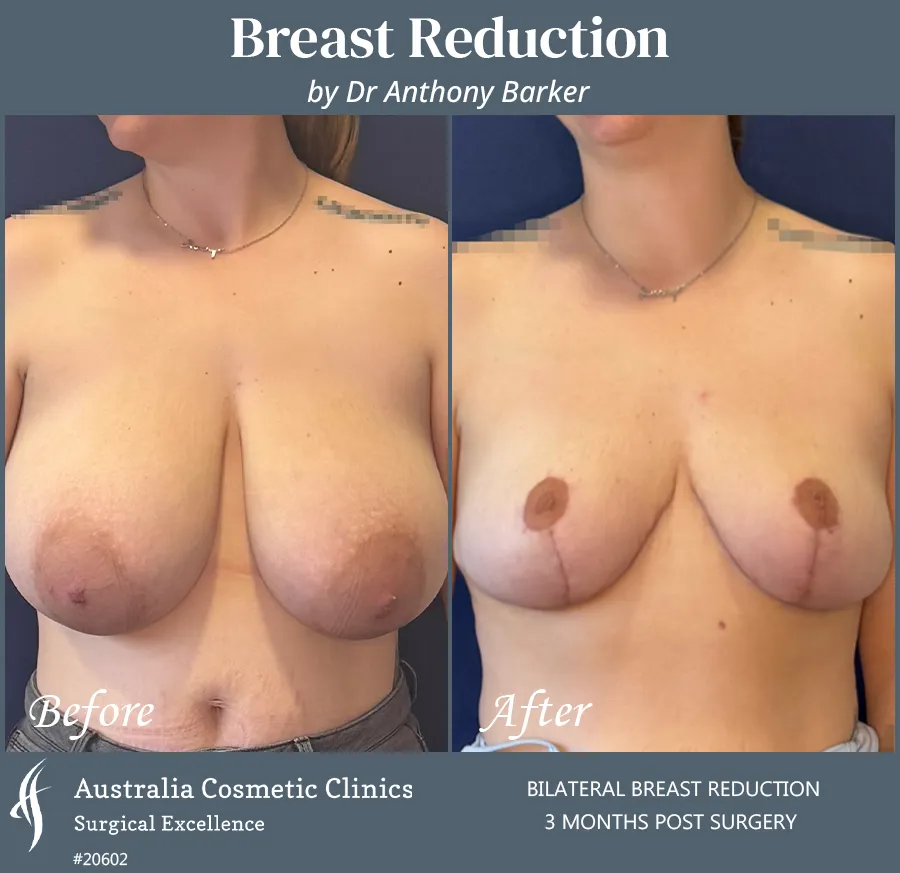
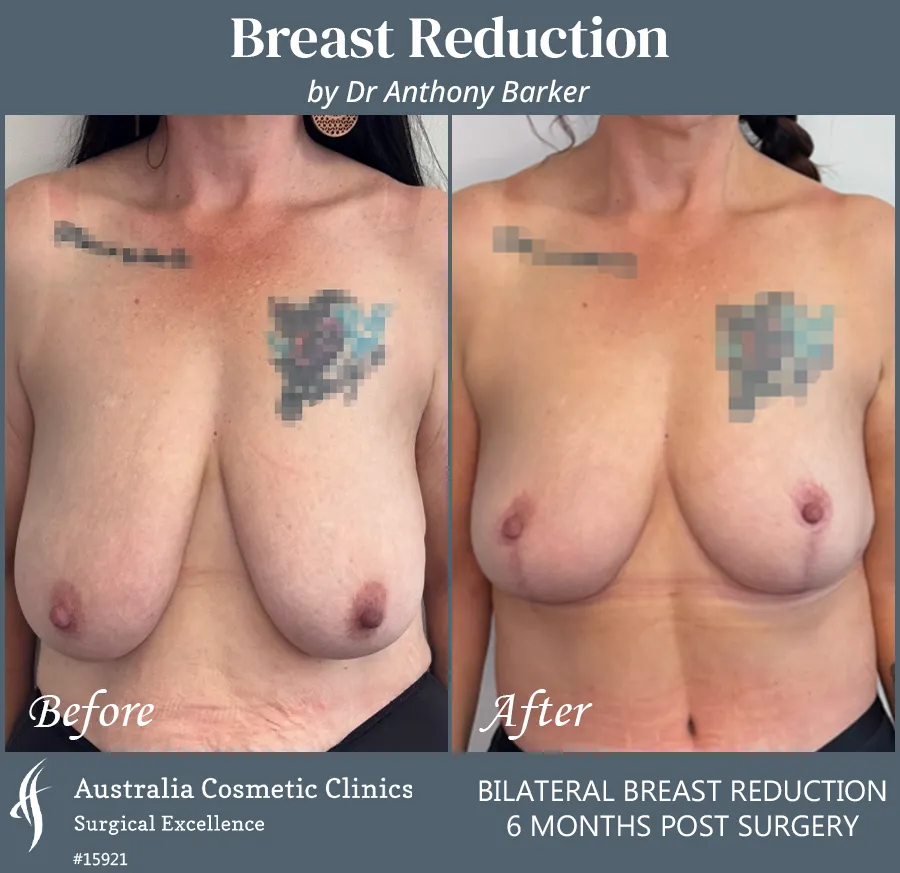
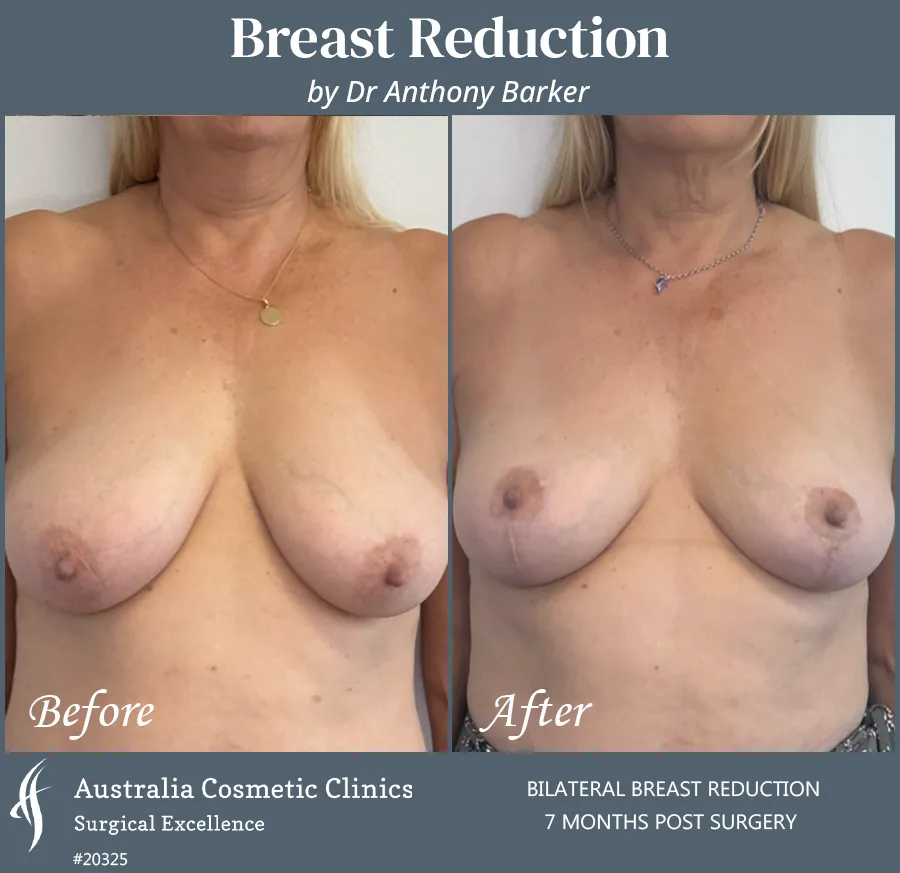
What Can Before-and-After Images Tell You About Breast Reduction?
Before and after images can provide context for incision patterns, scar placement, and the range of outcomes that may occur after breast reduction. Images are shown only where appropriate and where patient consent and privacy requirements allow.
Images represent individual outcomes and do not predict the outcome another person may experience. Results vary according to factors such as skin quality, breast composition, degree of reduction, existing asymmetry, healing and the surgical technique used.
Key points about breast reduction image galleries:
- Images show individual patient outcomes only
- Scar position and appearance vary between patients
- Breast shape and symmetry after surgery depend on individual anatomy and healing
- Your surgeon can explain likely incision patterns and scar locations during consultation
Breast Reduction Before & After
View Breast Reduction Before and After Photos
Disclaimer
All photographs have been used with the patient’s express written permission. The information on this site is not intended to replace expert medical advice. There are risks associated with any surgical or invasive operation. You should obtain the advice of a licensed health professional before continuing.
About Dr Anthony Barker
Dr Anthony Barker is a Specialist Plastic and Reconstructive Surgeon whose medical and engineering background shapes his approach to surgery. He completed a BA in Biomedical Engineering at Harvard University before completing his Bachelor of Medicine and Bachelor of Surgery and Master of Surgery in Plastics at the University of Sydney. His practice spans breast reconstruction and enhancement, body contouring, post-pregnancy restoration, and complex surgeries following significant weight loss.
Dr Barker is a Fellow of the Royal Australasian College of Surgeons in Plastic Surgery and a member of the Australian Society of Plastic Surgeons, Australian Society of Aesthetic Plastic Surgeons, and American Society of Plastic Surgeons. He also holds a Senior Clinical Lecturer appointment at Macquarie University, where he mentors surgical trainees and contributes to research, including projects relating to breast implant safety and breast augmentation and reconstruction.
- Credentials and professional memberships include
- BA in Biomedical Engineering, Harvard University
- Bachelor of Medicine and Bachelor of Surgery, University of Sydney
- Master of Surgery in Plastics, University of Sydney
- Fellow of the Royal Australasian College of Surgeons, Plastic Surgery
- Member of the Australian Society of Plastic Surgeons
- Member of the Australian Society of Aesthetic Plastic Surgeons
- Member of the American Society of Plastic Surgeons
- Senior Clinical Lecturer at Macquarie University
- Consultation commonly covers
- Suitability assessment and examination
- Technique options and incision patterns
- Scar expectations and recovery planning
- Discussion of risks and consent


FAQs about Breast Reduction (Reduction Mammoplasty)
How long does breast reduction surgery take?
Surgical time varies based on anatomy, the extent of reduction, and the incision pattern selected. The treating surgeon provides an estimate after assessment and planning.
Will scars be present after breast reduction?
Yes, incisions are required and scars are expected. Scar pattern and location depend on technique and anatomy, and scars typically change over time as they mature.
Can nipple or breast sensation change after surgery?
Sensation changes can occur and may be temporary or longer lasting. This is discussed during consultation as part of informed consent.
Is breastfeeding possible after breast reduction?
Breastfeeding capacity may be reduced for some patients and cannot be predicted with certainty for every individual. If breastfeeding is a priority, this is discussed during planning.
When can daily activities and work be resumed?
Return to work depends on job demands and recovery progress. Desk based roles may resume earlier than physically demanding roles, guided by the treating surgeon.
When can exercise be resumed?
Activity is typically reintroduced in stages, starting with gentle walking as advised. Higher intensity exercise is delayed until healing is progressing well and the surgeon provides clearance.
What are the main risks of breast reduction?
Risks may include infection, bleeding, delayed healing, fluid build-up, scarring variation, sensation changes, asymmetry, and anaesthesia-related risks. The treating surgeon explains individual risk factors during consultation.
Medical References
- American Society of Plastic Surgeons Evidence-Based Clinical Practice Guideline Revision: Reduction Mammaplasty — Published 2022, Reaffirmed 2026 / ASPS / https://www.plasticsurgery.org/for-medical-professionals/quality/evidence-based-clinical-practice-guidelines
- Breast Reduction / StatPearls – NCBI Bookshelf / https://www.ncbi.nlm.nih.gov/books/NBK441974/
- A systematic review of patient reported outcome measures for women with macromastia who have undergone breast reduction surgery / PMC – NIH / https://pmc.ncbi.nlm.nih.gov/articles/PMC6722998/
- Secondary reduction mammaplasty techniques and outcomes / PubMed – NIH / https://pubmed.ncbi.nlm.nih.gov/39151285/
Considering Breast Reduction? Schedule a Consultation With Dr Barker
Patients considering breast reduction can arrange a consultation at Australia Cosmetic Clinics. Consultation allows discussion of concerns, clinical assessment of suitability, explanation of incision patterns and technique options, and clear information about scarring, recovery, and potential risks.
- To request a consultation, patients can contact Australia Cosmetic Clinics via the website or phone
- The clinic team can explain what information is helpful to bring, including medical history, medication lists, and any recent breast imaging where applicable
Further Reading about Breast Reduction
Breast Lift
Procedure page
Breast Liposuction Sydney
Procedure Page
Recovery After Breast Reduction
Recovery Guide
Medicare for Plastic Surgery
Info Page
What's Next?
Whether you are ready for a professional evaluation or just have a quick question, we’ve made it easy to connect with our team. Choose the option that best fits your needs below.
Book your Consultation
Take the first step toward your goals by filling out the brief form below. This information helps us understand your specific needs so we can make the most of our time together during your session. Once you submit your details, a member of our team will review your request and reach out shortly to confirm your appointment.
Patient Photo Assesment
Reviewing photographs may help the clinical team understand the areas you would like to discuss and prepare for your consultation. A photo assessment does not replace an in-person clinical examination or determine suitability for surgery.
Tips for Uploading Photos
ASK A FRIEND
Friend takes photo
GOOD LIGHTING
Plain wall, bright light
ALL ANGLES
Front / sides/ 45°
CLEAR & SHARP
No portrait mode
SEND ORIGINALS
No edits or compression
Specialist Plastic &
Reconstructive Surgeon
Registration: MED 0001192942
Dr Anthony Barker is a specialist plastic and reconstructive surgeon whose medical and engineering background shapes his approach to surgery. He integrates the precision of engineering with the artistry of plastic surgery, striving to balance aesthetics and function in every procedure. His practice spans breast reconstruction and enhancement, body contouring, post-pregnancy restoration and complex surgeries after significant weight loss. Recognised for his compassionate consultations, he customises each procedure to help patients achieve natural, confidence-boosting results using advanced techniques and technologies.
Qualifications & Professional Memberships
- BA in Biomedical Engineering (Harvard University)
- Bachelor of Medicine & Bachelor of Surgery (University of Sydney)
- Master of Surgery (Plastics – University of Sydney)
- Fellow of the Royal Australasian College of Surgeons (Plastic Surgery)
- Member – Australian Society of Plastic Surgeons, Australian Society of Aesthetic Plastic Surgeons, American Society of Plastic Surgeons




Accreditations